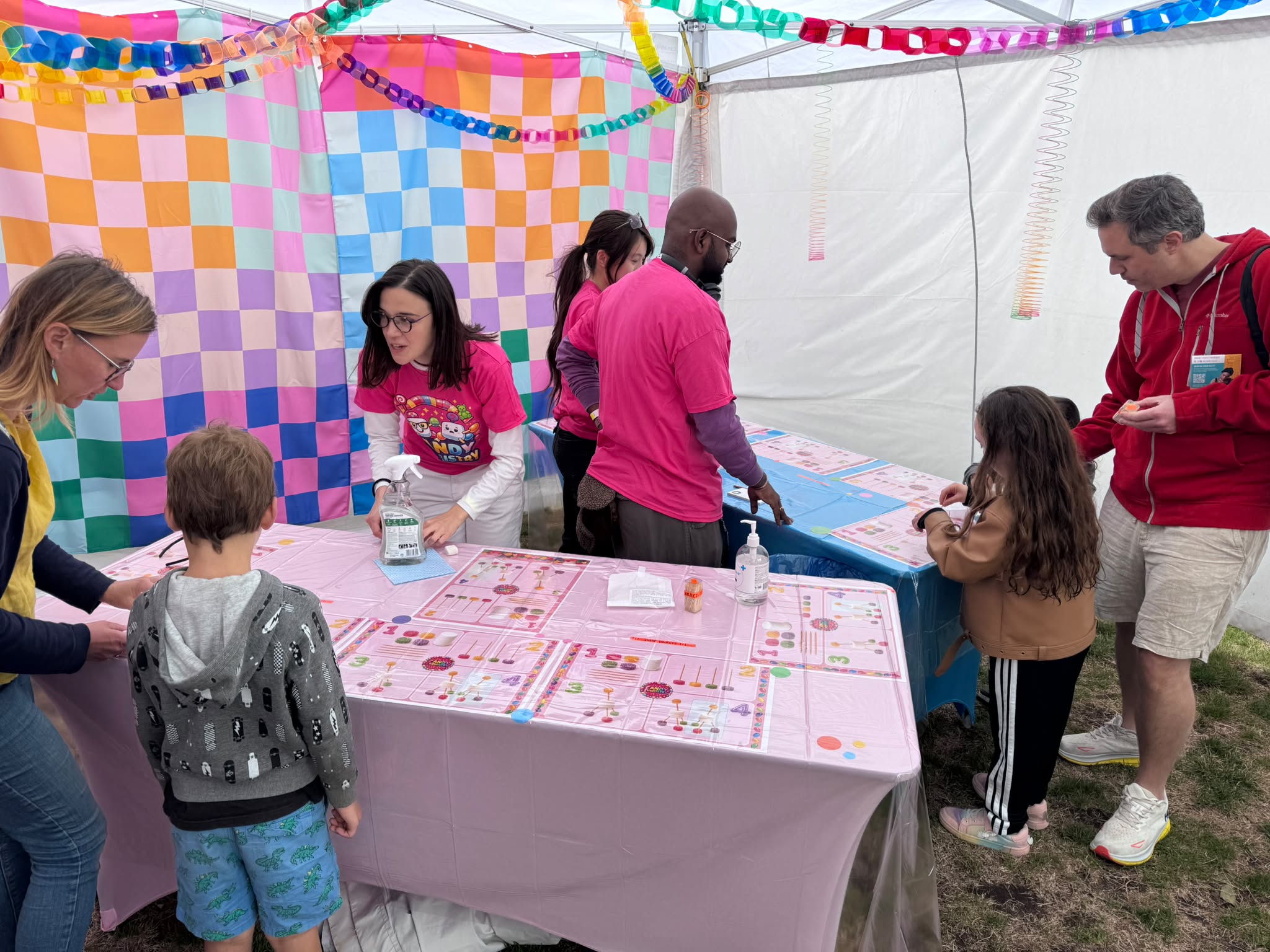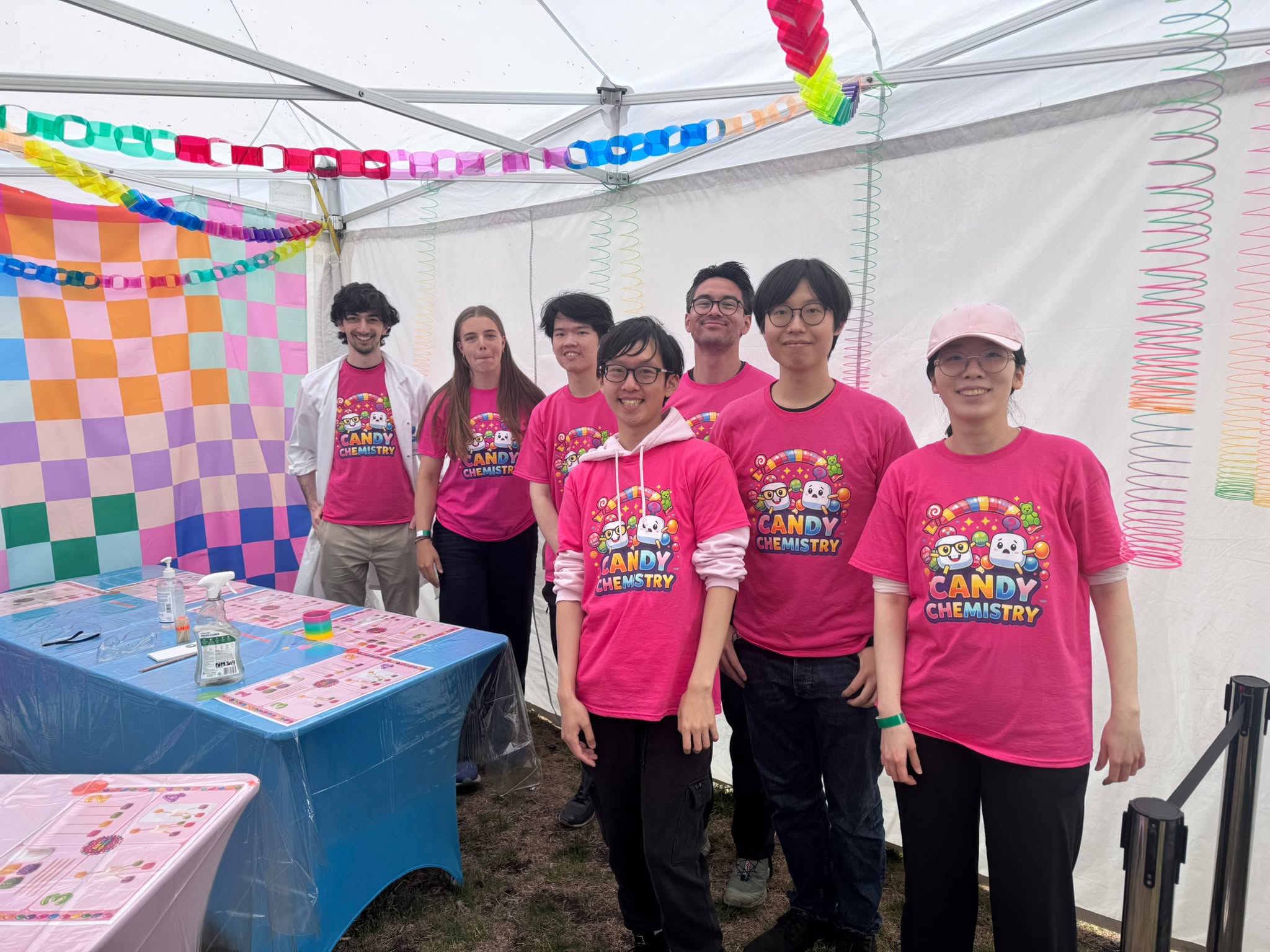

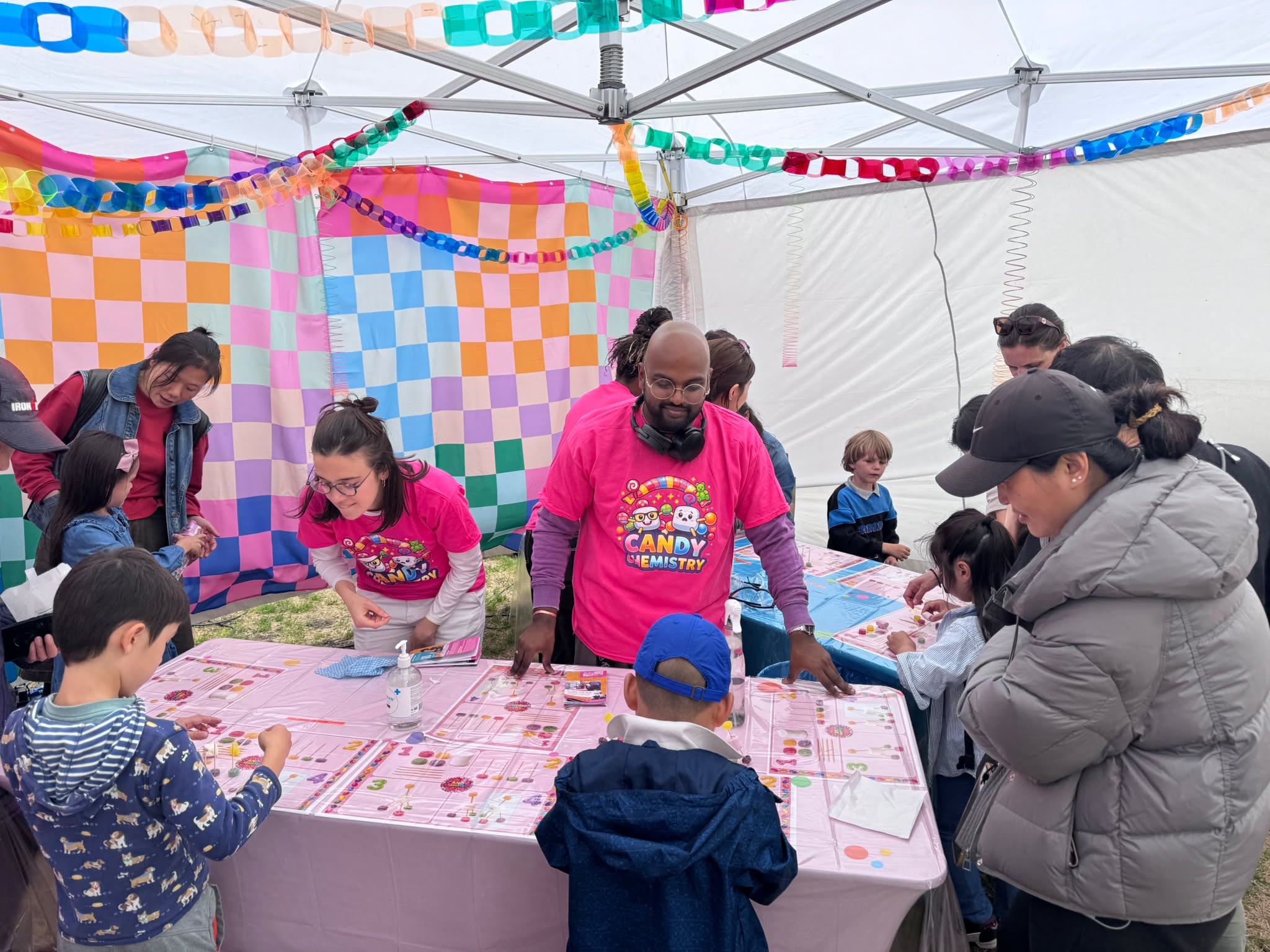
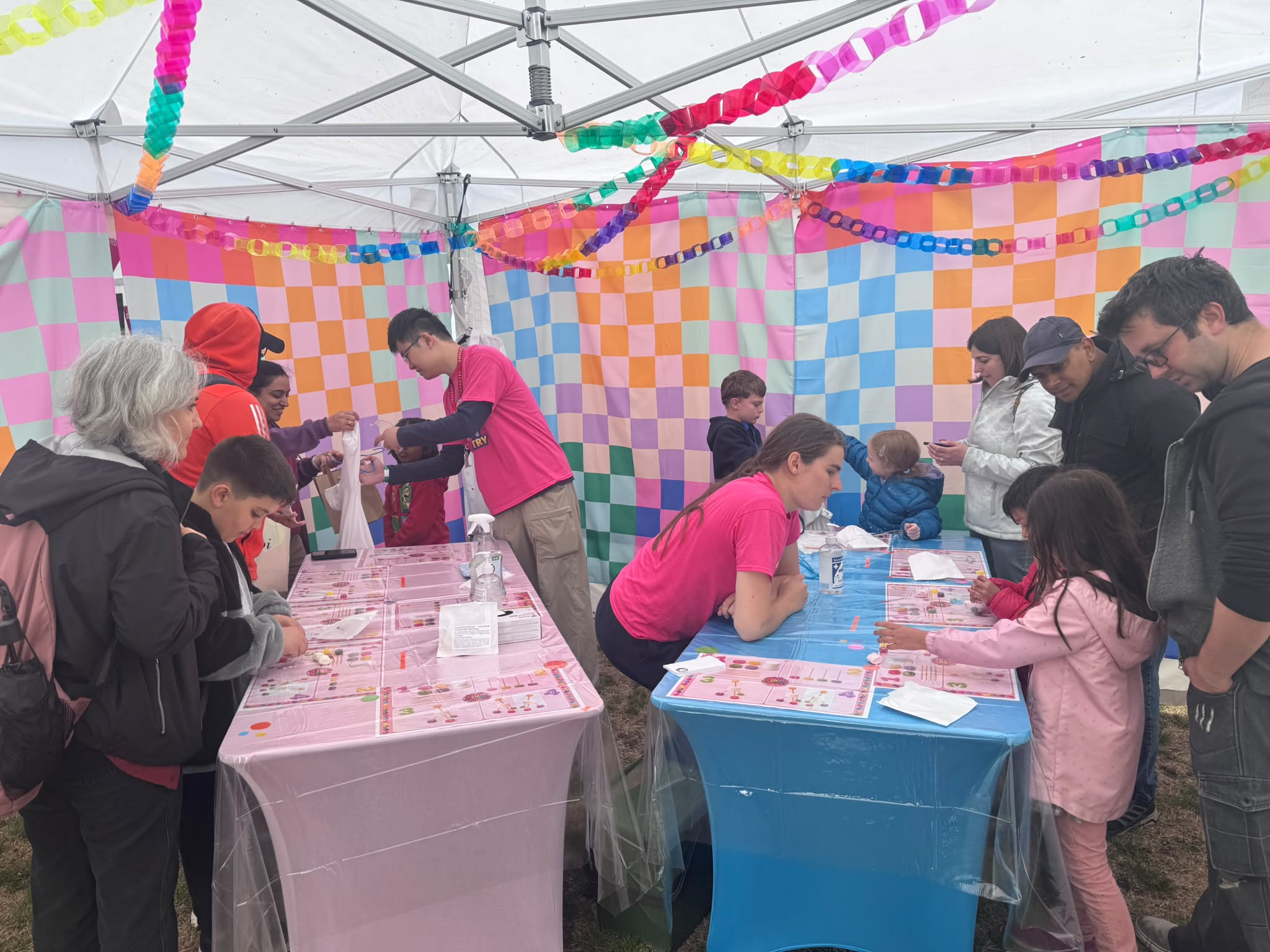
Researchers from Imperial College London brought science to life at the Road Festival 2026, held on 6–7 June, engaging thousands of visitors through their interactive exhibit, Candy Chemistry. The festival welcomed approximately 57,000 attendees, providing a vibrant setting for public engagement with STEM.
The exhibit introduced visitors to the concept of molecular chirality, the idea that molecules can exist in left- and right-handed forms with distinct properties that influence applications such as pharmaceuticals, fragrances, and materials science. The activity also highlighted how AI is increasingly used to predict and design molecular structures with tailored characteristics.
Developed collaboratively by the Sargent Centre for Process Systems Engineering, the Department of Chemical Engineering, the Department of Computing, and the EPSRC Centre for Doctoral Training in Collaborative Computational Modelling at the Interface (CCMI), the exhibit showcased interdisciplinary research at the heart of AIchemy.
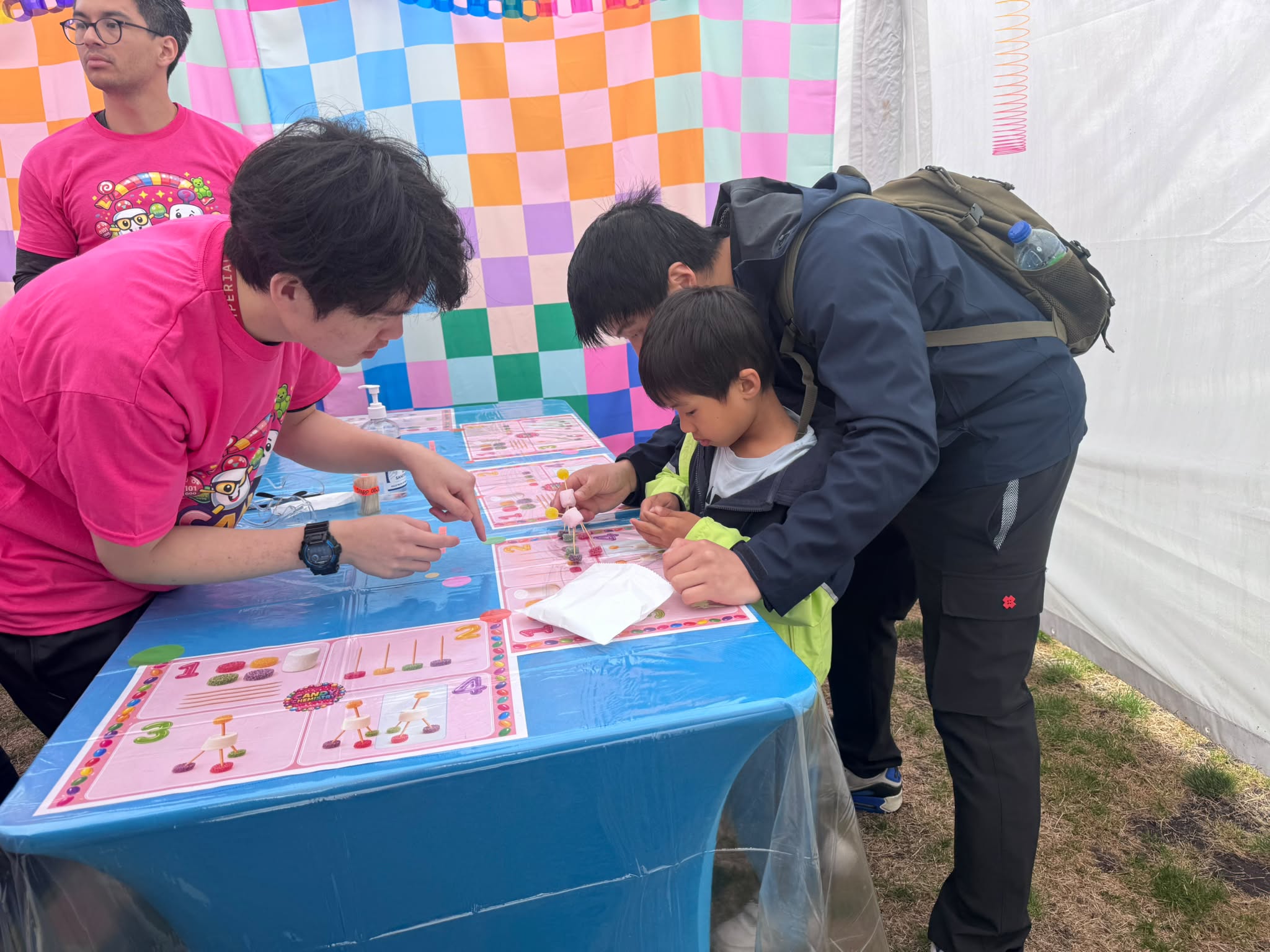
Visitors, particularly children and families, were invited to construct edible molecular models using marshmallows, toothpicks, and multicoloured gummy sweets. This hands-on approach enabled participants to explore molecular structures, examine mirror-image forms, and understand how small structural differences can have significant real-world impacts.
The activity was delivered by a team of over 40 volunteers, led by Professor Ruth Misener, who collectively engaged around 800 children, along with parents and carers. Among the volunteers were Tingting Wang (Prof. Kim Jelf’s group) and Shirui Wang (Dr. Alex Ganose’ group), both of whom contributed to delivering the activity. Tingting also played a key role in designing the exhibit’s posters and activity sheets, enhancing the overall visitor experience.
The exhibit generated strong engagement and highly positive feedback, with visitors responding enthusiastically to the interactive format. The initiative not only communicated complex scientific concepts in an accessible way but also provided valuable opportunities for researchers and CDT students to develop their science communication and public engagement skills.