
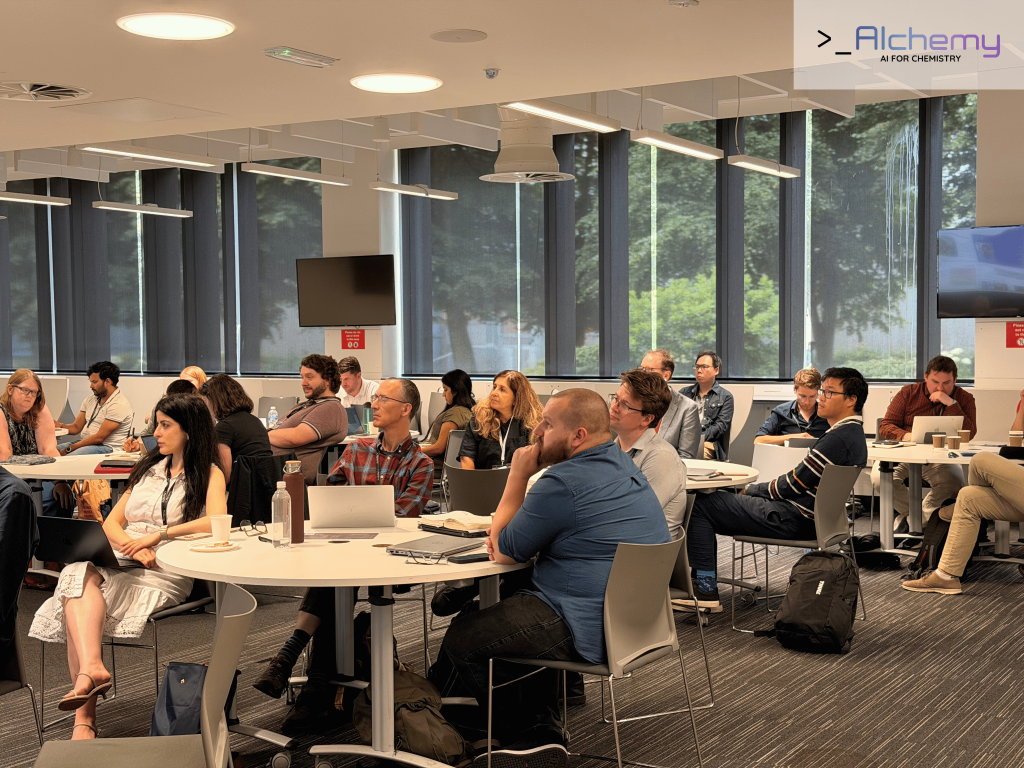
On Tuesday 21 July, AIchemy welcomed chemistry educators from across the UK to the University of Liverpool for our GenAI in Chemistry Education Symposium. The event provided a collaborative space to explore one of the most rapidly evolving topics in higher education: how we can use generative AI to enhance chemistry teaching in ways that are practical, ethical and inclusive.
As generative AI continues to transform the educational landscape, the workshop brought together a diverse community to share experiences, showcase innovative practice and discuss the opportunities and challenges that lie ahead. Rather than asking whether AI should be part of chemistry education, the conversations throughout the day focused on how we can integrate these tools responsibly while continuing to place learning, critical thinking and academic integrity at the heart of teaching.
Learning from a Diverse Community
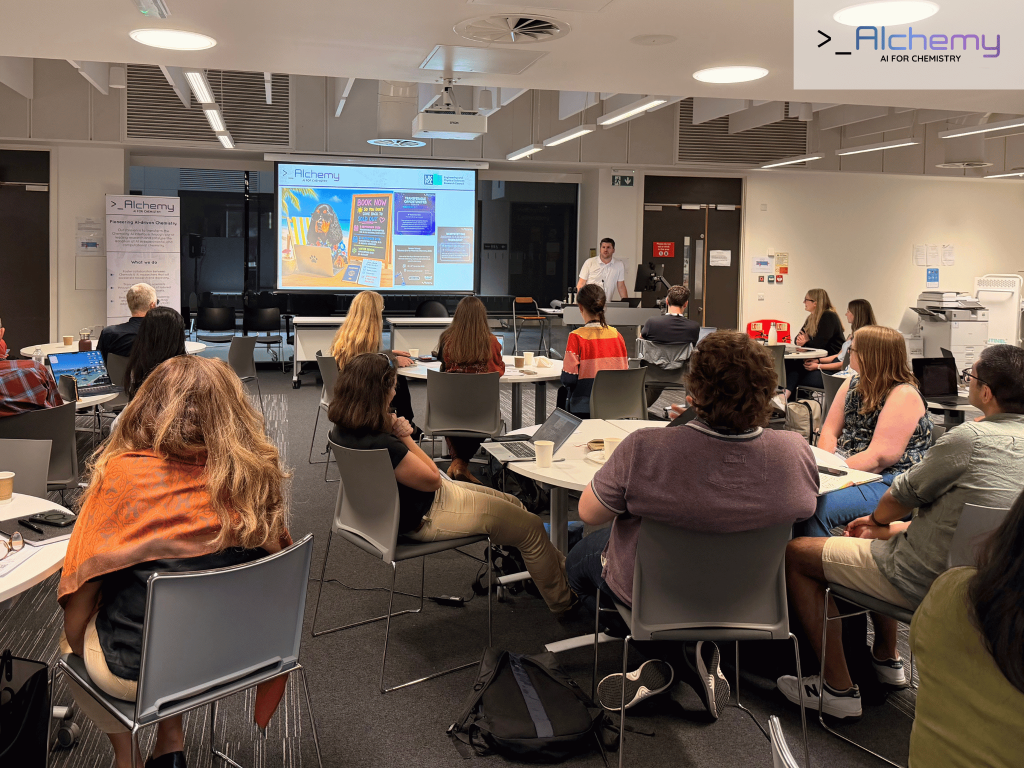
The programme featured a fantastic range of invited talks, practical demonstrations and lightning presentations from educators who are already embedding generative AI into teaching, assessment and curriculum design.
Delegates heard from Dr Ghada Rabah (NC State University), who shared international perspectives on the evolving role of AI in higher education, alongside Dr Jason Sonnenberg (Wolfram|Alpha), who demonstrated how AI-powered computational tools are reshaping learning and problem-solving in chemistry.
Sessions from Dr Peter Alston (BPP University) and Professor Kathryn Cowton (University of York) explored the opportunities and challenges of embedding AI into teaching practice, highlighting the importance of developing AI literacy alongside critical thinking and academic integrity.
In the afternoon, lightning talks from across the chemistry education community demonstrated just how quickly innovation is taking place. Speakers shared experiences of redesigning assessments, integrating coding and AI into chemistry teaching, understanding student perceptions of generative AI, and developing new approaches to digital skills training.
Collaboration Through Discussion
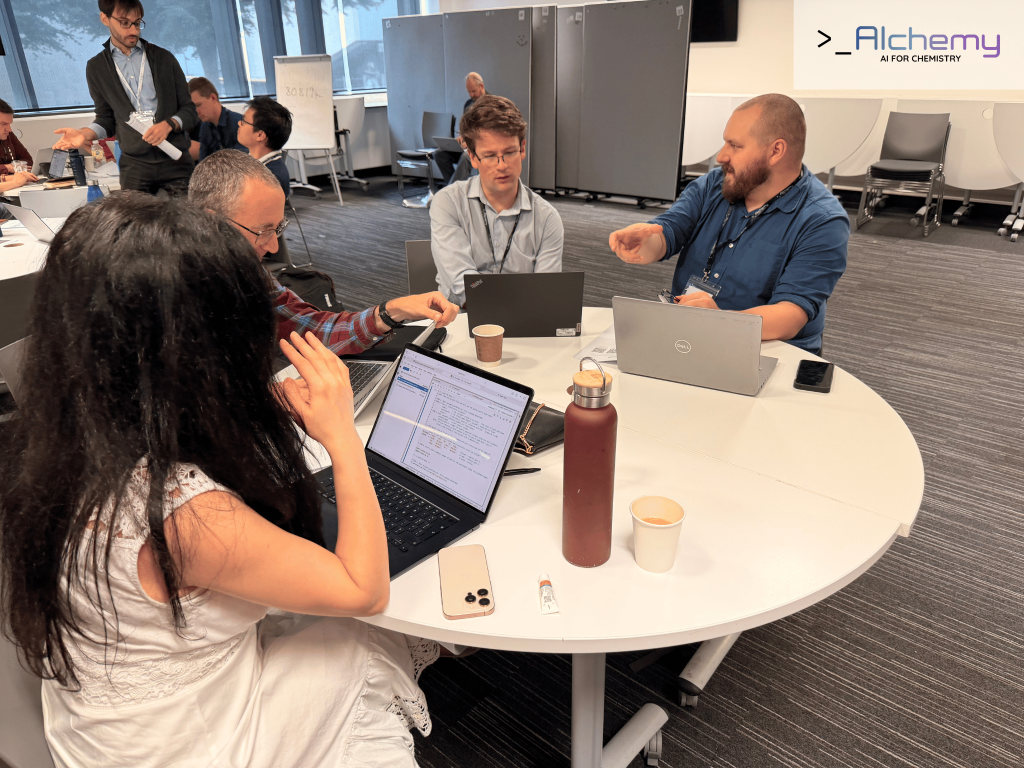
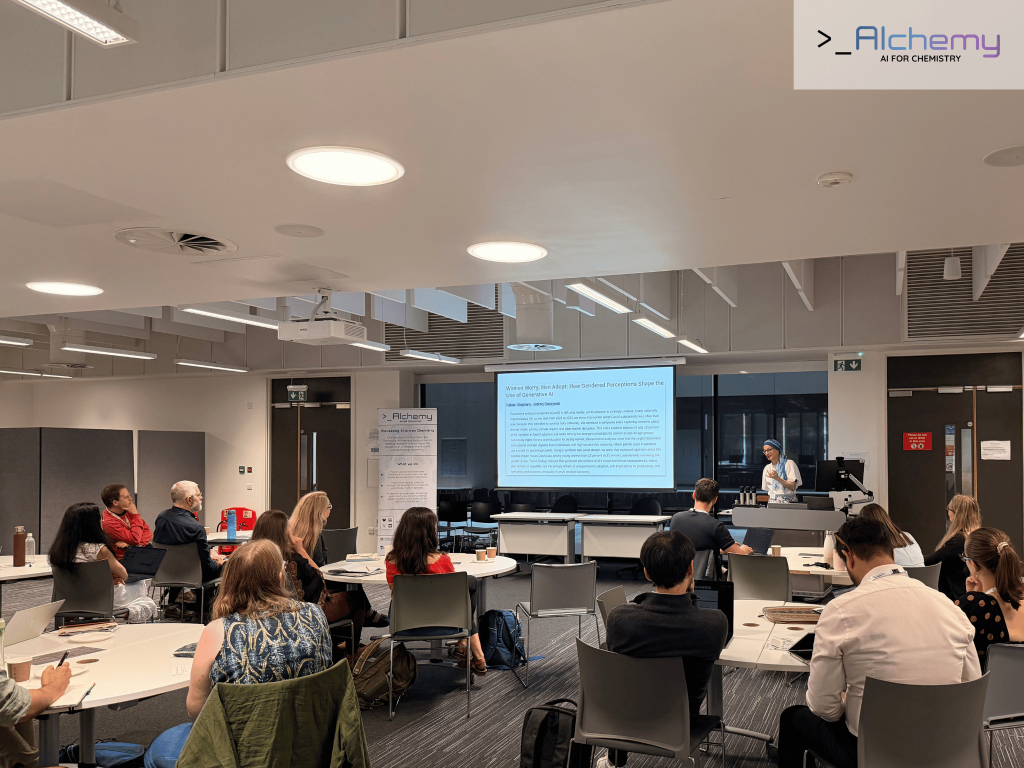
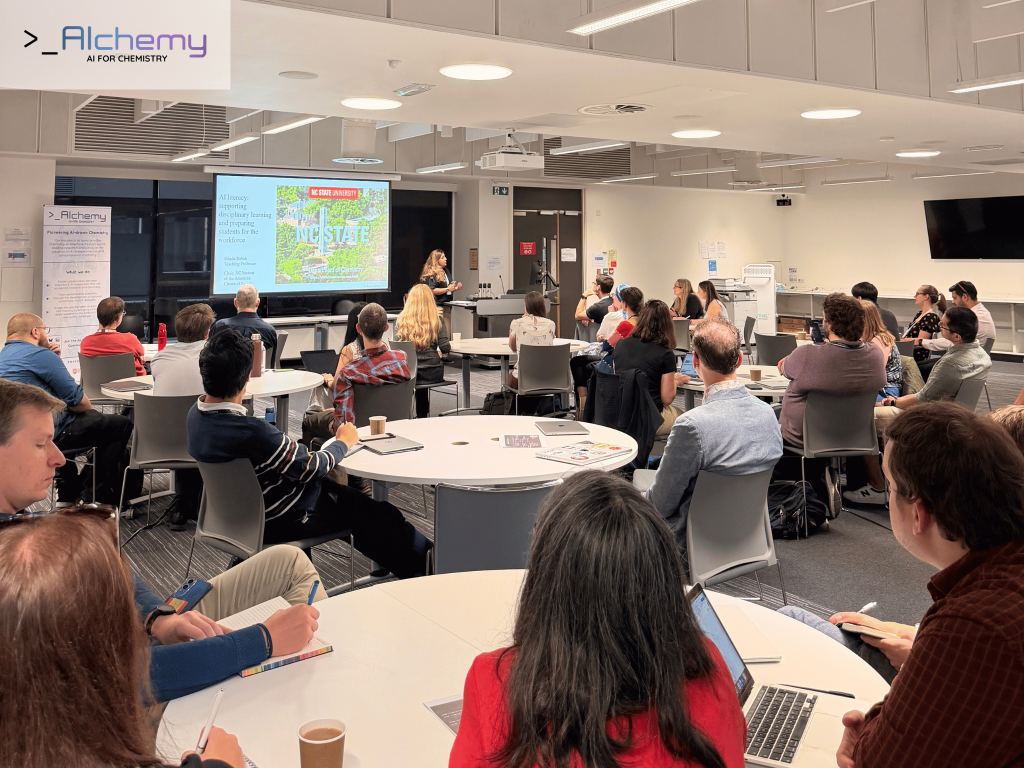
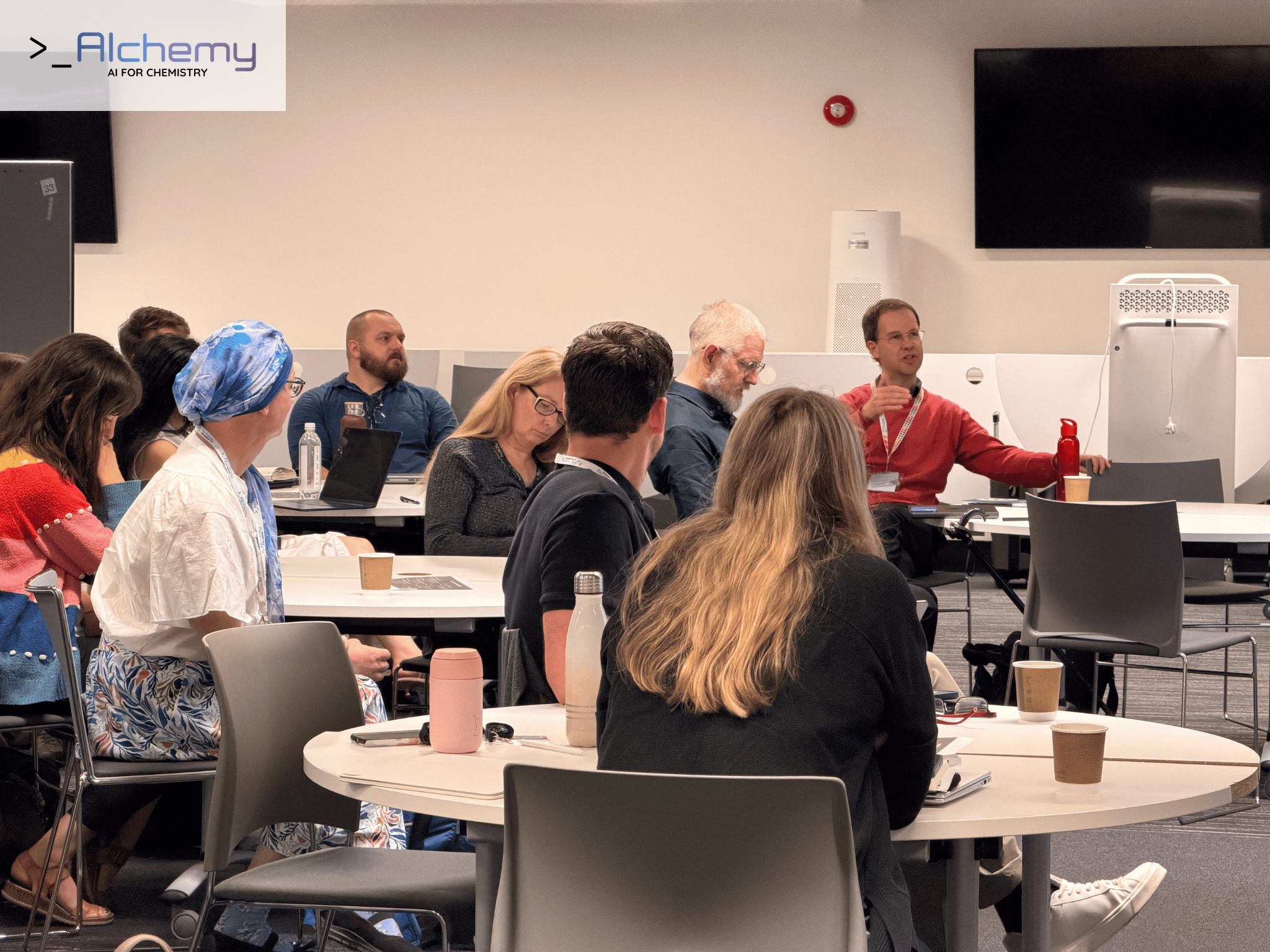
One of the most valuable aspects of the symposium was the opportunity for open discussion. Interactive sessions encouraged delegates to reflect on how AI is already influencing teaching within their own institutions and to exchange ideas on policy, assessment, ethics and best practice. The conversations highlighted that while institutions are taking different approaches, there is a strong desire across the community to work together to develop evidence-based guidance and share successful approaches.
Dr Rebecca Jones and Dr Benji Fenech-Salerno (Imperial College London) shared practical examples of how generative AI is being integrated into chemistry education, demonstrating classroom-ready approaches that delegates could begin adapting within their own institutions. Dr Denise Hough (University of Glasgow) concluded the invited talks by exploring how educators can navigate the rapidly changing AI landscape whilst ensuring that students develop the skills needed to use these technologies responsibly and effectively.
Hands-on demonstrations gave delegates the opportunity to experience AI-enabled teaching activities first-hand, explore prompting techniques and consider how these tools can be integrated into existing curricula. By focusing on practical examples, attendees left with ideas they could immediately begin adapting within their own teaching environments.
This collaborative spirit is central to AIchemy’s mission. By bringing together educators from different institutions and disciplines, we can collectively build confidence in using AI effectively while ensuring that chemistry education continues to evolve in ways that benefit both students and staff.
Looking Ahead
The enthusiasm throughout the day demonstrated that the chemistry education community is keen to embrace the opportunities presented by generative AI, whilst remaining thoughtful about its responsible implementation.
Events like this are an important step towards building a connected community that can share knowledge, develop best practice and shape the future of chemistry education together.
A huge thank you goes to all of our speakers, delegates and organisers for contributing to such an engaging and thought-provoking day. The quality of the discussions and willingness to share experiences made this a truly collaborative event, and we look forward to continuing these conversations through future AIchemy activities.
If you would like to stay informed about upcoming AIchemy events, funding opportunities and community activities, subscribe to our mailing list or follow us on LinkedIn and Bluesky.
We look forward to seeing you at our next event!
If you would like to find out more about how AIchemy can support your workshop idea click the button below.