
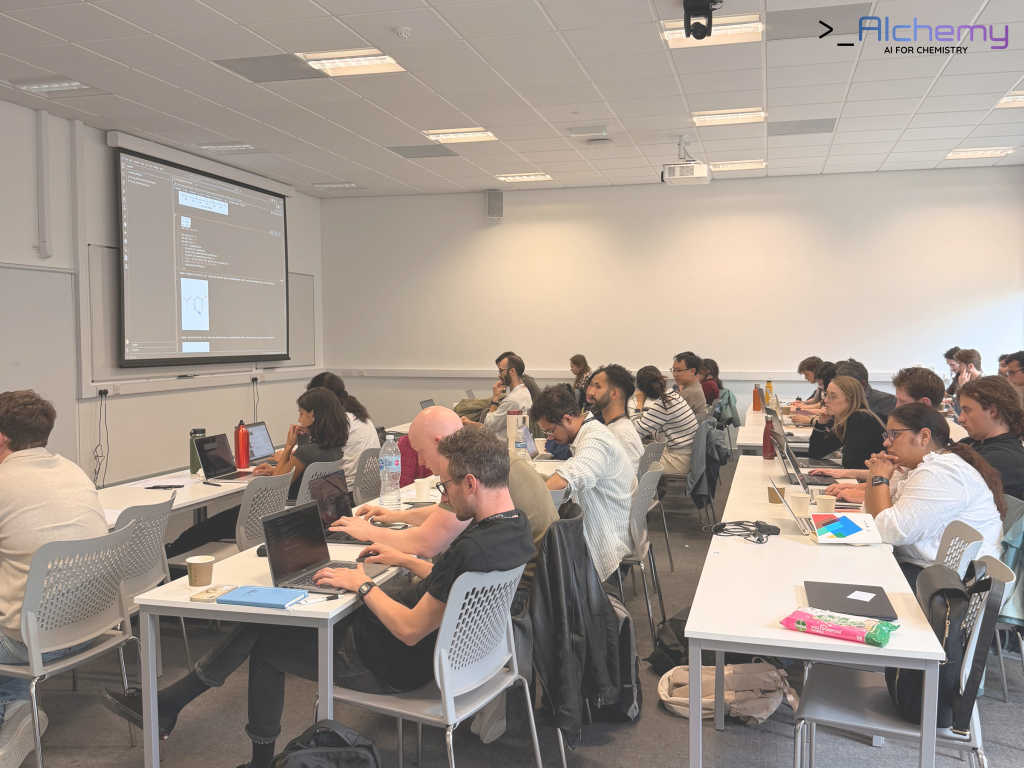
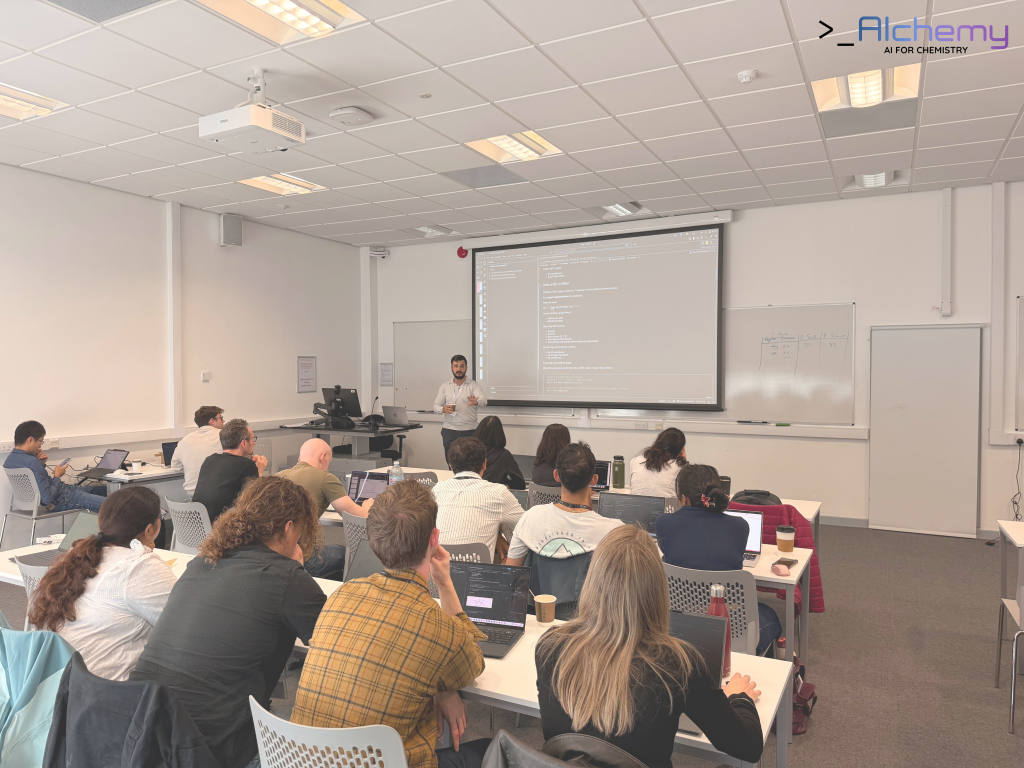
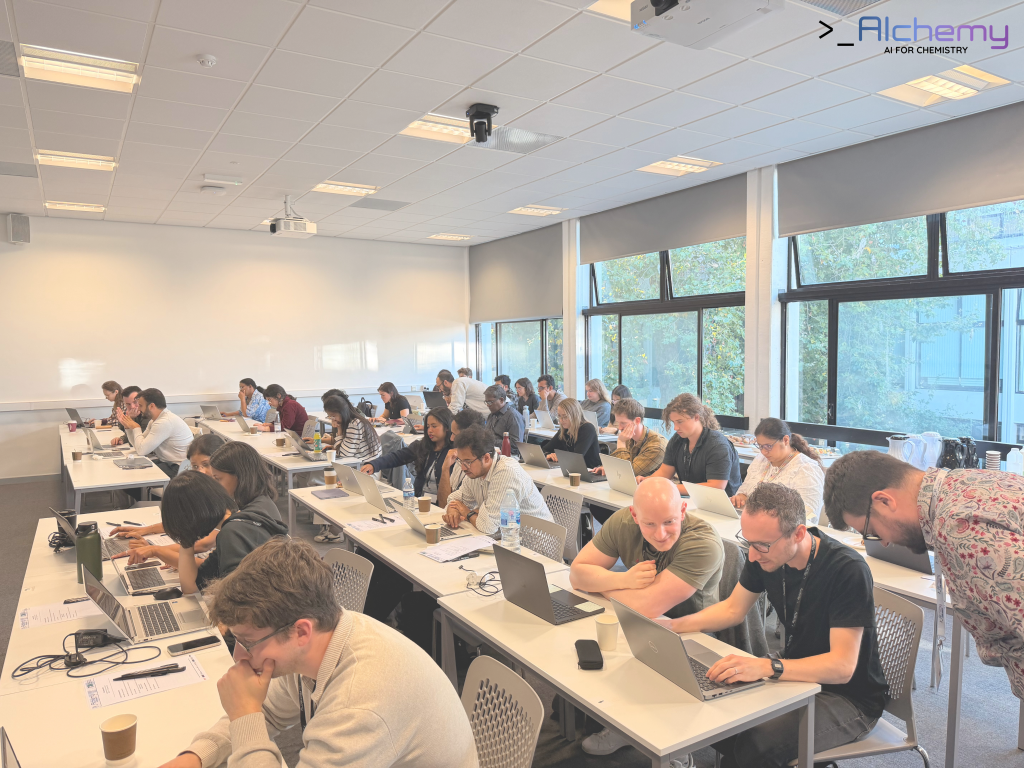
From 1st – 3rd September, AIchemy welcomed researchers to the University of Liverpool for the Chemical Artificial Intelligence in Homogeneous Catalysis (ChemAICat) Workshop – three days of practical training exploring how artificial intelligence and data-driven approaches can accelerate and complement research in homogeneous catalysis.
Designed specifically for experimental and computational chemists, the workshop focused on making AI methods accessible and, importantly, useful. Across the three days, delegates progressed from the fundamentals of Python and cheminformatics through to machine learning, chemical space exploration and AI-driven optimisation, with practical sessions allowing them to put their new skills into practice.
Building the Foundation
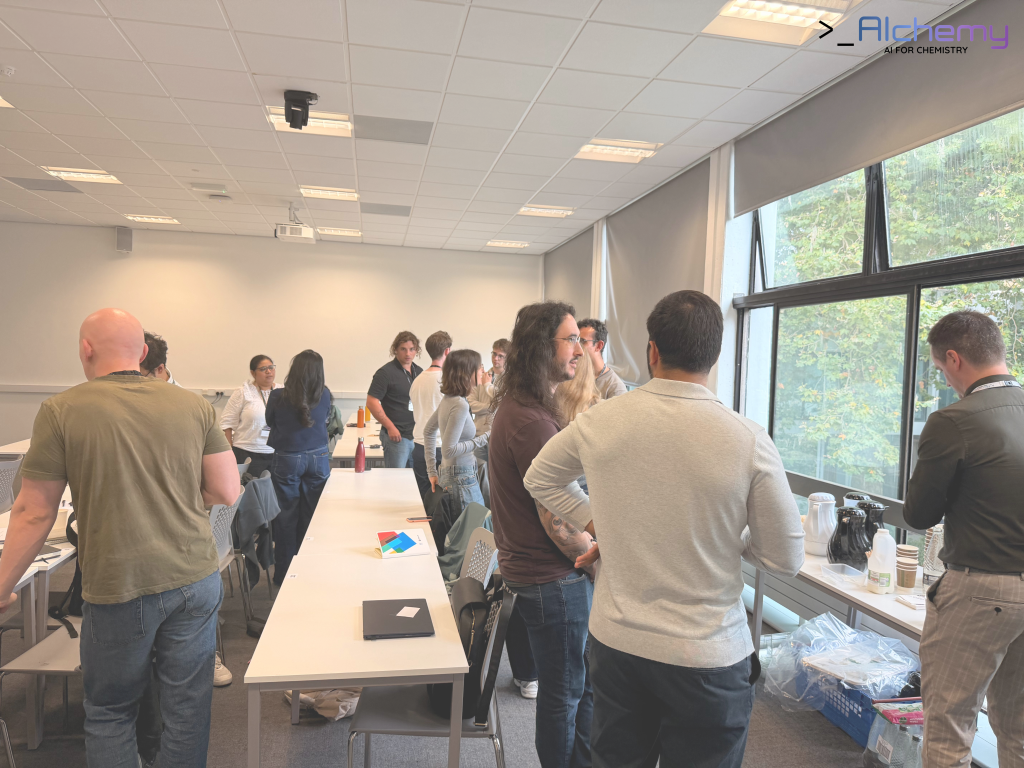
The workshop began by establishing the foundations needed to work confidently with chemical data. Dr Jamie Cadge (University of Bath) introduced delegates to Python, before Dr Ruben Laplaza (IIQ, University of Seville-CSIC) explored cheminformatics and its application within chemistry. Rather than focusing solely on theory, delegates had the opportunity to apply what they had learned through practical Python and cheminformatics exercises. Dedicated Q&A and custom challenge sessions also created space for participants to explore questions relevant to their own research.
This hands-on approach was central to ChemAICat: equipping researchers with workflows and techniques that could be taken away and incorporated into their day-to-day research.
From Chemical Data to Machine Learning
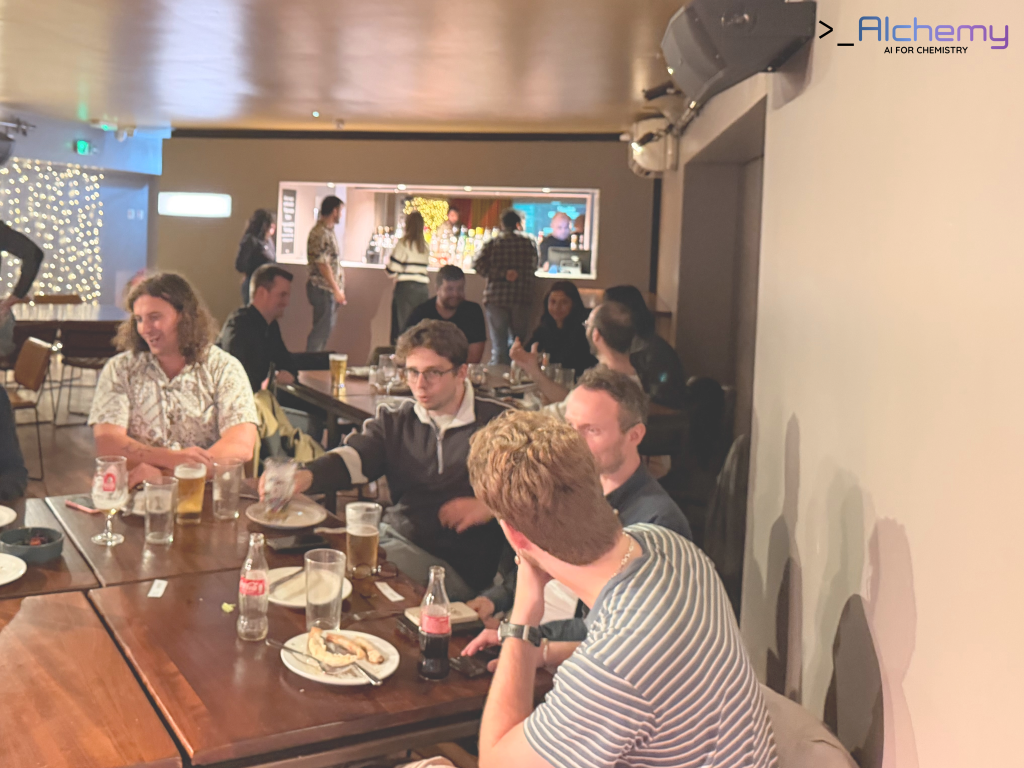
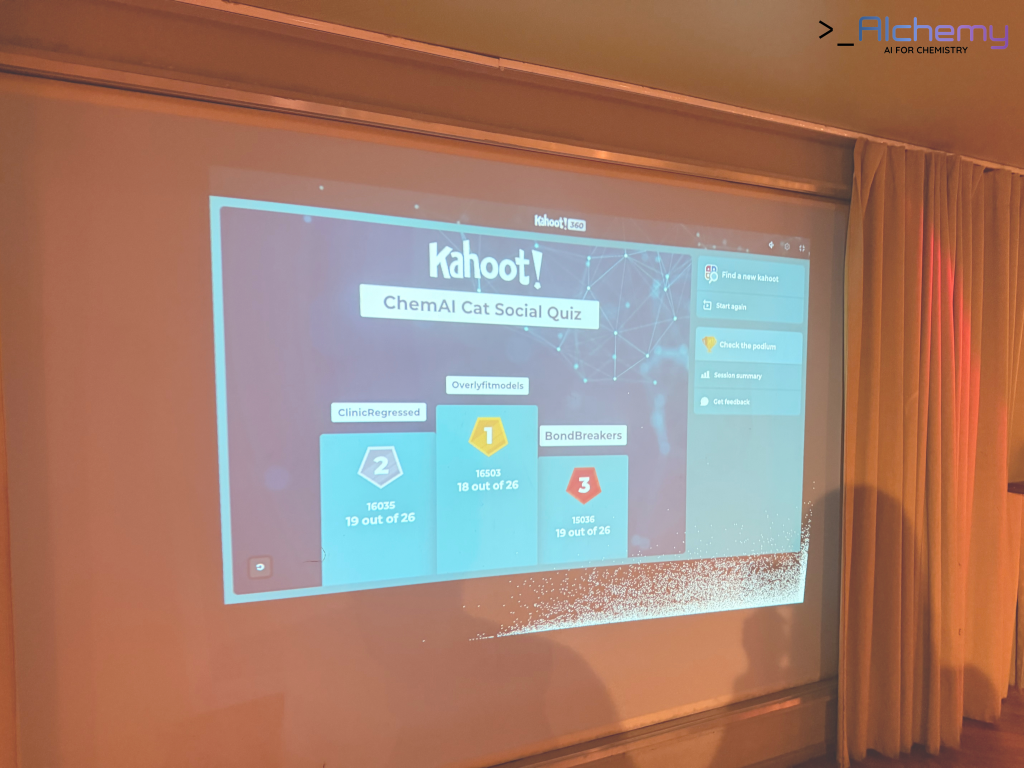
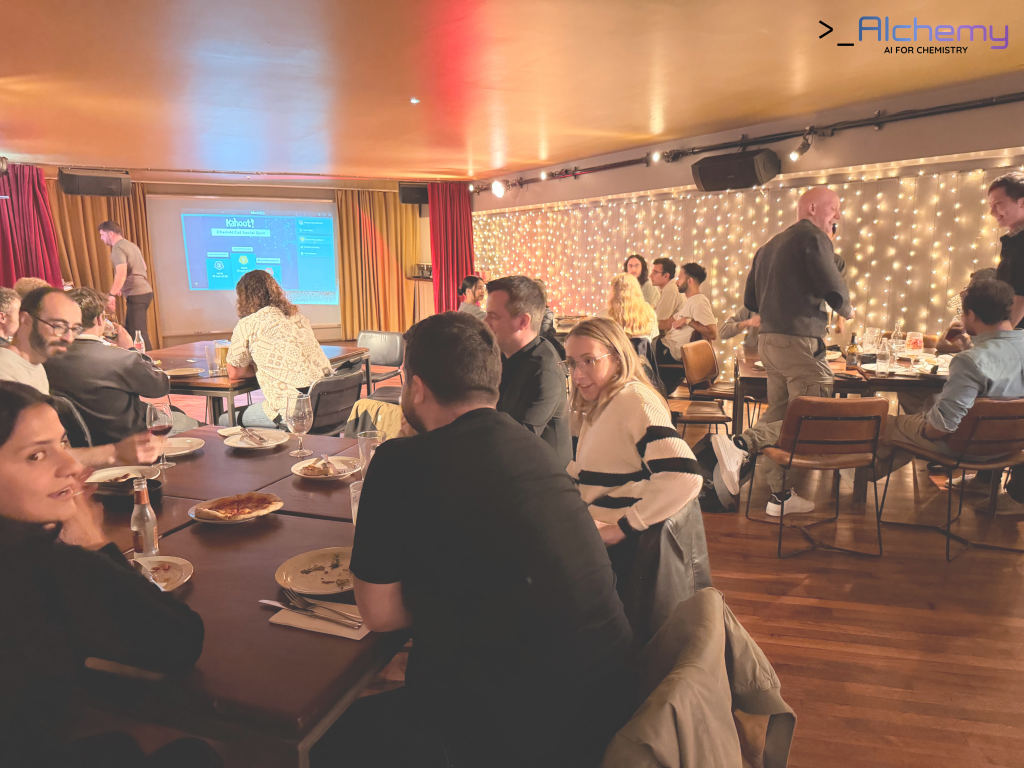
Dr Juan V. Alegre-Requena (ISQCH, University of Zaragoza-CSIC) introduced molecular descriptor generation before exploring chemical AI and machine learning modelling. Delegates then put these concepts into practice during a hands-on session led by Dr Jamie Cadge, working with descriptor generation and ML modelling. The sessions demonstrated how chemical information can be transformed into data that machine-learning models can work with, providing delegates with practical approaches for incorporating these methods into their own research. The learning continued beyond the formal programme, with a social evening at Fredericks on Liverpool’s Hope Street providing an opportunity for delegates and course supervisors to continue conversations, exchange ideas and build new connections in a more informal setting.
Exploring Chemical Space and Optimising Reactions
The final day brought the different elements of the workshop together, looking at how AI can support some of the more complex challenges encountered within catalysis research. Dr Thijs Stuyver (PSL University) led sessions on chemical space exploration and catalyst sampling, followed by AI-driven optimisation of reaction conditions. These sessions highlighted how data-driven approaches can help researchers navigate large chemical spaces more efficiently and make informed decisions about where to focus experimental effort – demonstrating the potential for AI not to replace chemical expertise, but to complement it. Throughout the workshop, Q&A and custom challenge sessions gave participants the opportunity to discuss how the approaches introduced during the course could translate to their own research problems.
Learning Through Practice and Collaboration
A key aim of ChemAICat was to move beyond simply talking about the possibilities of AI in chemistry and instead give researchers the confidence to begin using these approaches themselves. By combining expert-led teaching with practical exercises, problem solving and discussion, the workshop provided a supportive environment in which delegates could develop new computational skills while considering how they could be applied within their own areas of homogeneous catalysis. Bringing together researchers with different backgrounds and levels of computational experience also created valuable opportunities for knowledge exchange – an important part of AIchemy’s wider mission to build skills, capability and connections across the chemistry and AI communities.
Looking Ahead
As AI and data-driven methods become increasingly embedded within chemical research, developing the skills to understand and apply these approaches will be essential. ChemAICat demonstrated what can be achieved when chemical expertise is combined with accessible, practical AI training, giving researchers not only an introduction to new techniques, but workflows and knowledge they can continue to develop beyond the workshop.
A huge thank you goes to Dr Jamie Cadge, Dr Ruben Laplaza, Dr Juan V. Alegre-Requena and Dr Thijs Stuyver for sharing their expertise across the three days, and to all of our delegates for bringing their questions, research challenges and enthusiasm to the workshop.
We hope everyone left Liverpool with new skills, new connections and plenty of ideas for how AI could support their research.
If you would like to stay informed about upcoming AIchemy training opportunities, workshops, funding and events, subscribe to our mailing list or follow us on LinkedIn and Bluesky.
We look forward to seeing you at our next event!