
As 2025 comes to a close, it’s time to look back at a year of achievement, collaboration, and innovation at the intersection of Chemistry and Artificial Intelligence. From flagship conferences to hands-on workshops, public engagement, and strategic partnerships, AIchemy has been buzzing with energy and impact.
Here’s our 2025 Wrapped, the highlights, milestones, and moments that made this year extraordinary.
- 9 webinars connecting global researchers and industry leaders
- 3 training schools & workshops building skills in AI, robotics, and materials chemistry
- 12+ live events, including conferences, industry engagement, and public events
- 1,500+ attendees engaged across webinars, events, and training
- 10 pump-priming projects funded with £250,000 to kickstart innovative research
- 14 internships across 8 UK higher education institutions
- £25,000 in travel awards to support collaborations and interdisciplinary research
- 7 high-impact publications advancing AI-driven chemical discovery
- 120 AI tools created through the Global LLM Hackathon
- 35 industry partners collaborating with AIchemy
- High-profile Recognition including Faraday Fellowship, Royal Society awards, and media coverage in The Economist
From AI-powered laboratories to public engagement, research collaboration, and impactful funding, 2025 has been a year of progress and inspiration.
Let’s explore the events, accomplishments, and moments that made 2025 a remarkable year for AIchemy.
AIchemy 2025 Events
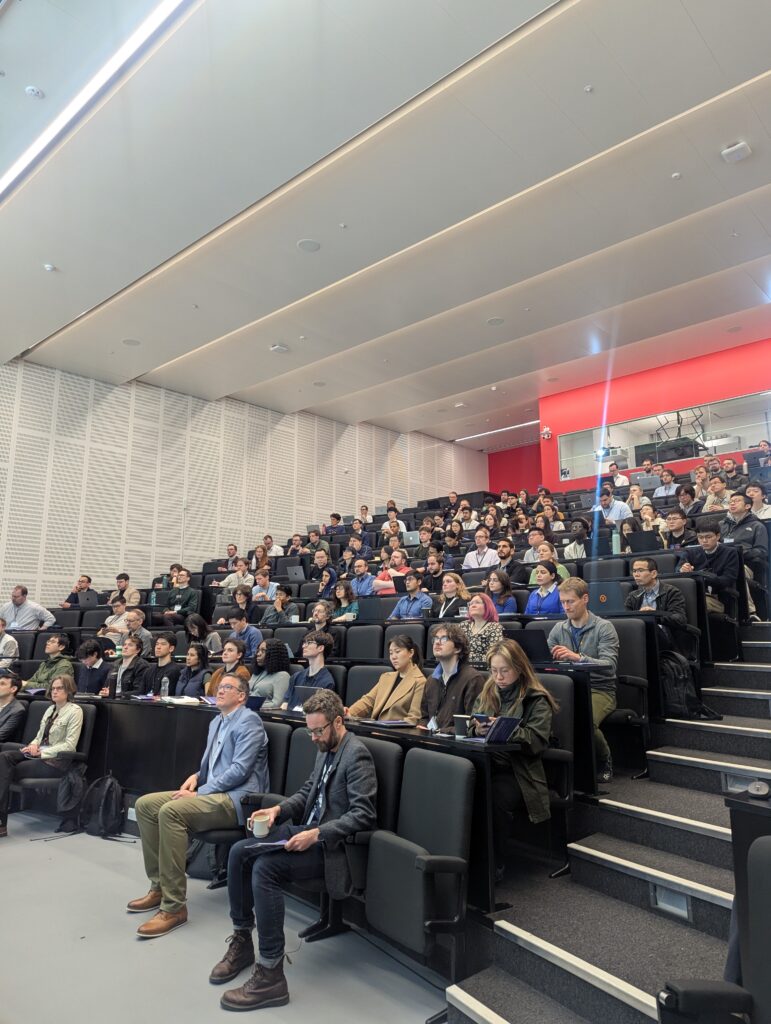
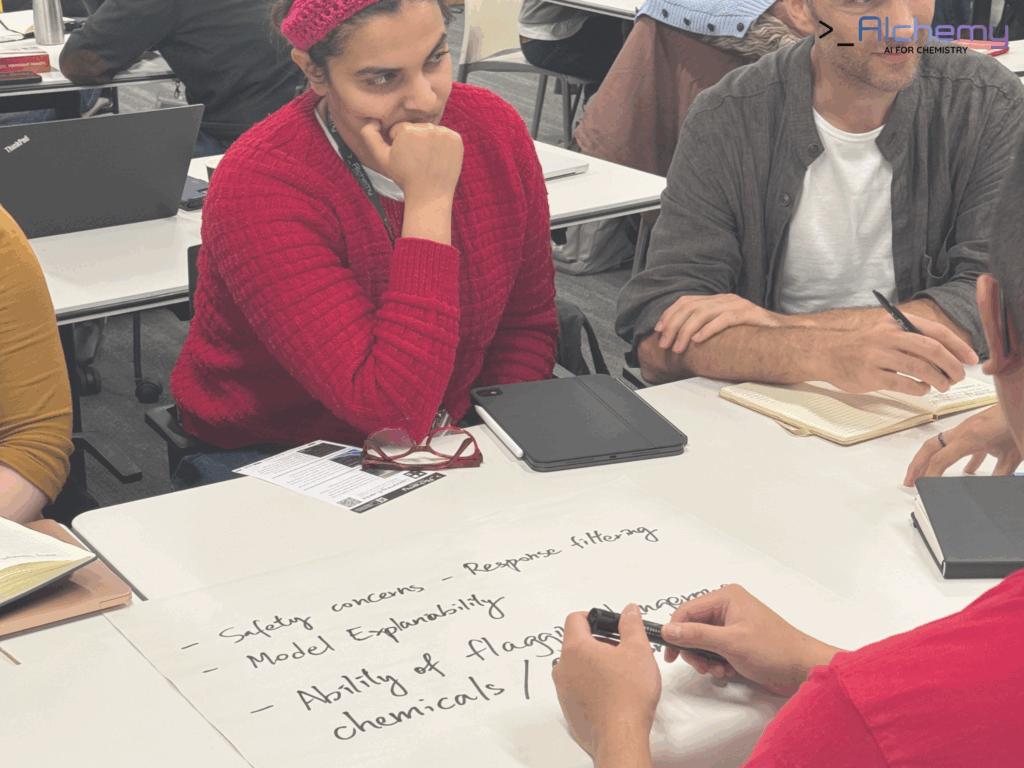
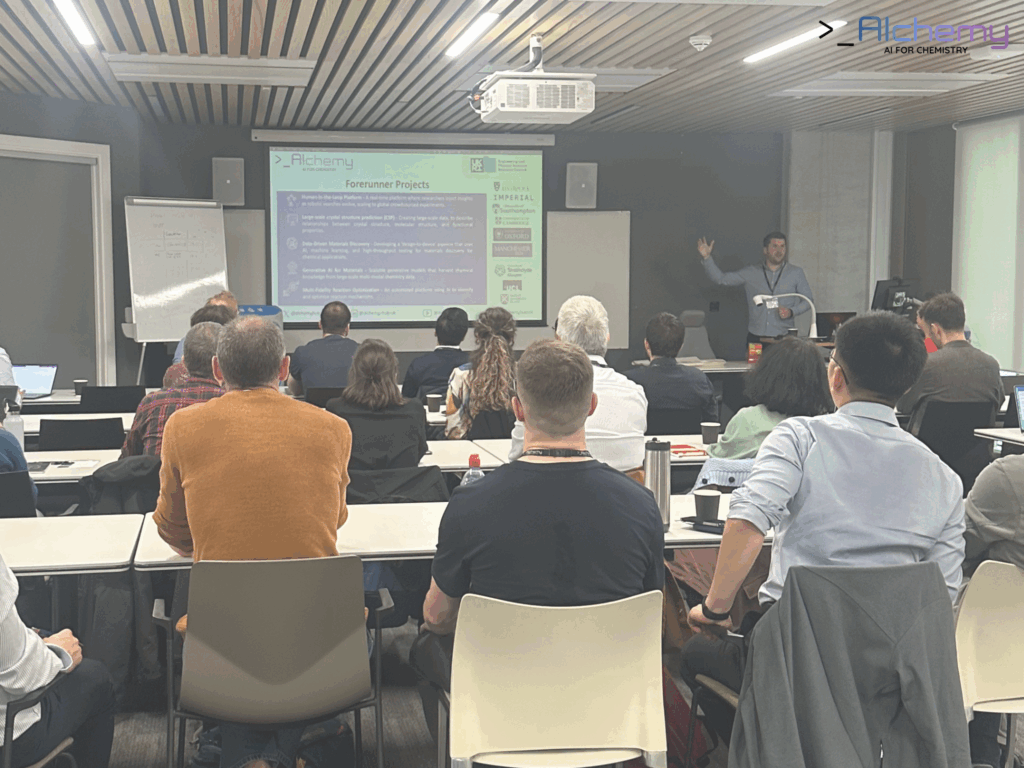
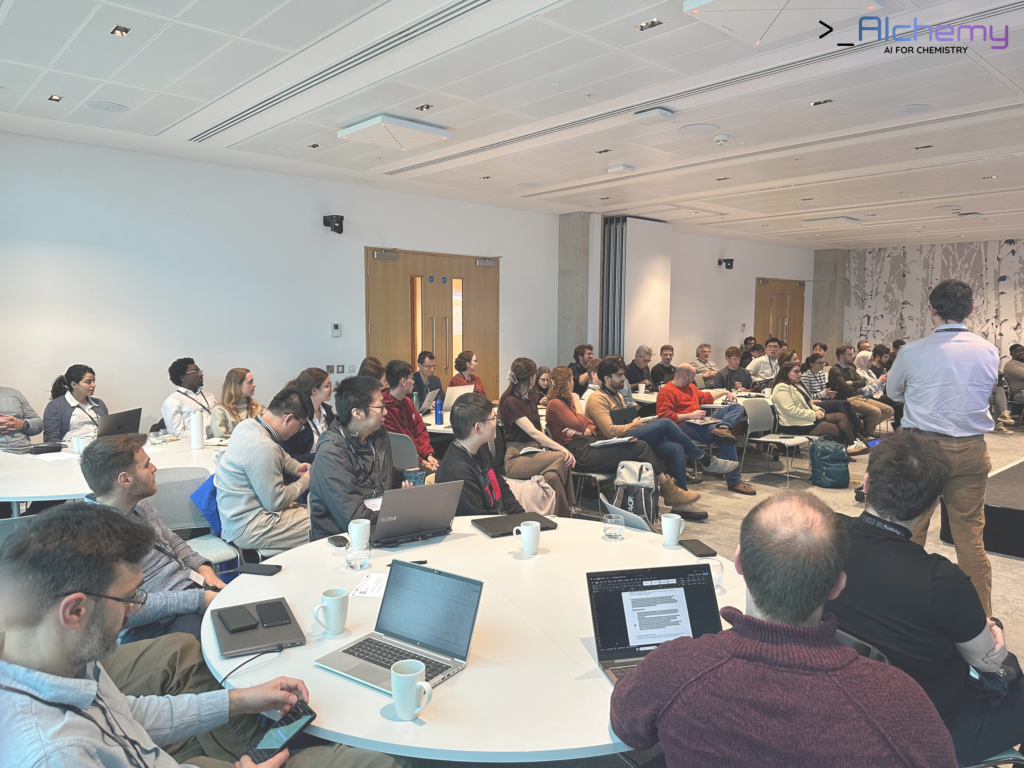
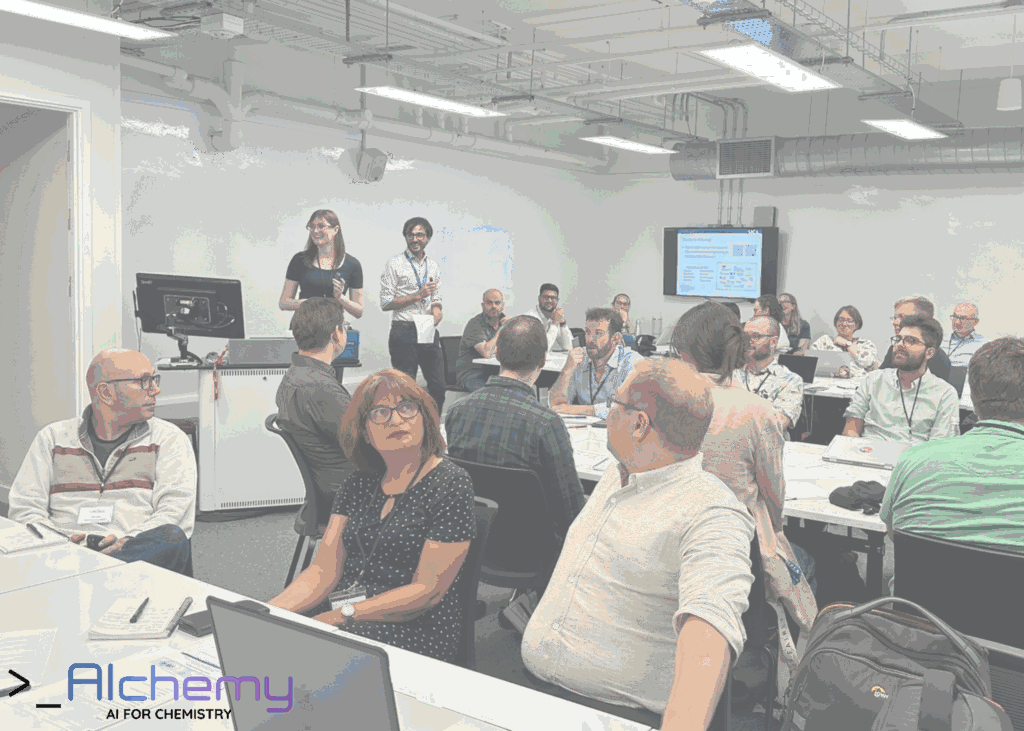
This year, AIchemy brought together researchers, industry partners, and the wider community through 9 webinars, 3 training schools, and over a dozen live events, fostering collaboration, learning, and innovation at the intersection of AI and chemistry.
The year began with our monthly webinar series, where Dr. Sterling Baird discussed building “self-driving labs” and Dr. Austin Mroz explored multi-fidelity Bayesian optimisation, chaired by Keith Butler in January. February’s session featured Dr. Fadwa El Mellouhi on data-driven materials discovery and Ross Urqurhart on machine-learning potentials. In March, Prof. Philippe Schwaller introduced chemical language models while Yuan Li showcased high-throughput robotic titration, hosted by Gabriella Pizzuto.
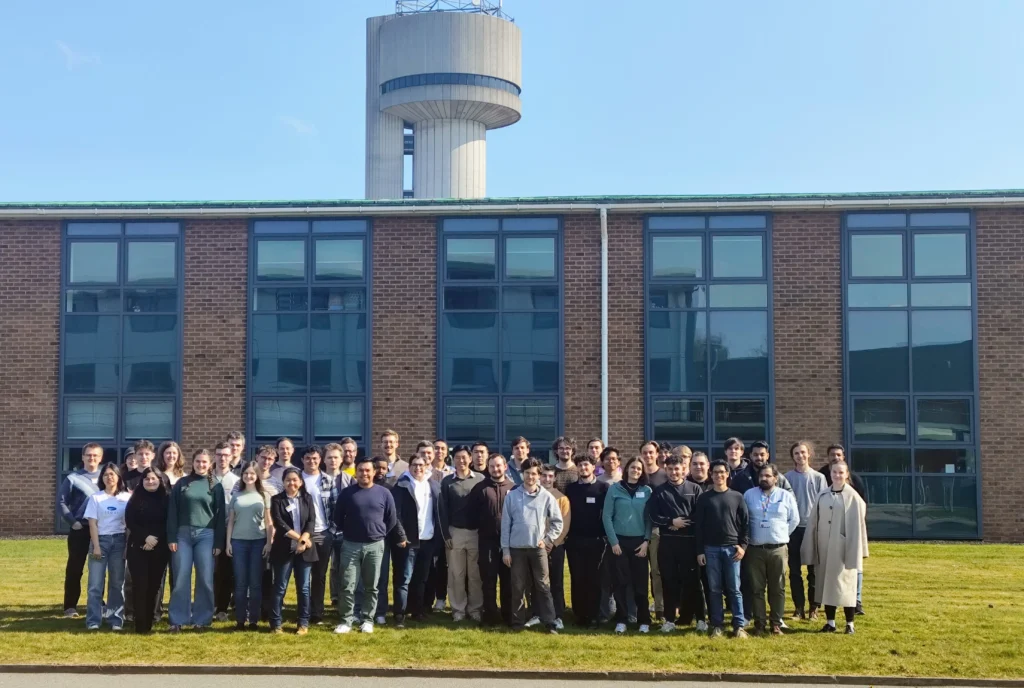
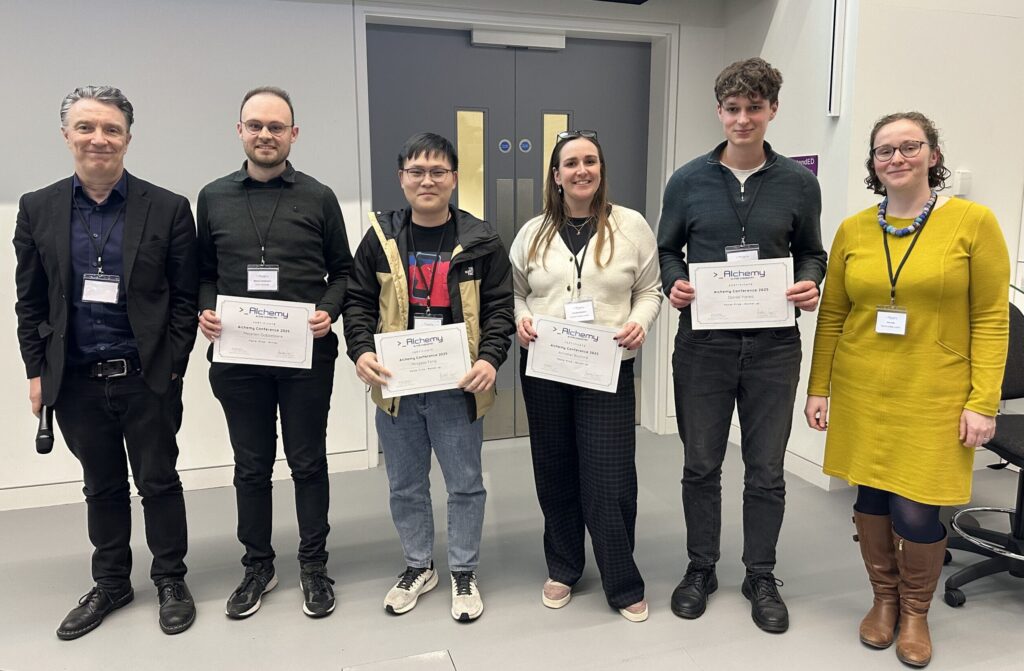
In mid-March, AIchemy hosted its Inaugural Annual Conference, our flagship event that brought together academics and industry partners to explore AI, robotics, and materials science. April’s webinar featured Linden Schrecker (SOLVE Chemistry) and Nessa Carson (AstraZeneca) discussing efficient data collection and automation, with Alex Ganose chairing. Concurrently, the CAMML Training School offered early-career researchers hands-on training in machine learning for molecules and materials. May saw James Odgers presenting on Bayesian inference and Prof. Abigail Doyle on machine learning for reaction optimisation in our webinar series, while AIchemy went public at Pint of Science Liverpool, sharing AI and chemistry insights with a wider audience.
July was a particularly busy month. Our webinar featured Prof. Jason Hein and Sriram Vijayakrishnan on robotics-assisted chemistry. The (Gen)AI in Chemistry Education Workshop at Imperial explored the role of generative AI in teaching, while the InChem Industry Engagement Day at the University of Liverpool demonstrated AI solutions for industrial challenges. July also included the Inorganic Informatics Workshop, focusing on data-driven approaches for materials discovery.
September’s webinar showcased Prof. Rafael Gomez-Bombarelli and Yushu Han discussing scalable AI applications, followed by the Global LLM Hackathon, which produced 120 AI tools for chemical discovery and experimentation. Later that month, the RAG Models & AI Agents Workshop and the OChRA Workshop provided hands-on experiences with autonomous AI agents, and open lab automation frameworks.
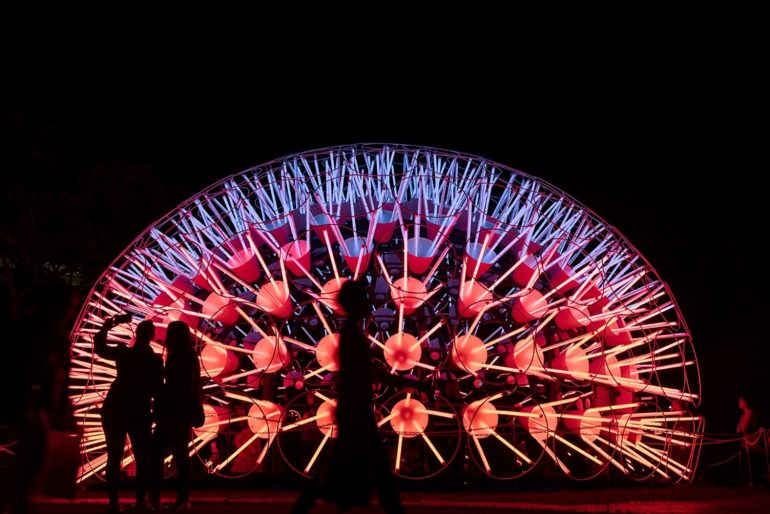
October’s webinar featured Prof. Bingqing Cheng and Yuxing Zhou on interatomic potentials and device-scale simulations. Outside the lab, AIchemy engaged the public at the River of Light Festival in Liverpool, combining AI, chemistry, and interactive installations. In November, the AI-Infused Sustainable Manufacturing Symposium, co-hosted with SCHEMA, explored AI for greener chemical production. That month’s webinar included Dr. Lauren Ye Seol Lee and Omer Omar discussing AI for reaction optimisation, while the Agentic AI in Chemistry Symposium examined autonomous systems in discovery and design.
Finally, December closed the year with the Winter School on AI & Robotics for Materials Chemistry, offering intensive, hands-on training, and a partnership visit to Mettler Toledo in Zurich to develop our strategic partnership.
Investing in People and Ideas
2025 was a year of investment in both talent and innovation at AIchemy. Through our pump-priming funding call, we supported 10 pioneering projects with a total of £250,000, helping to kick-start research at the interface of AI and chemistry. These projects are designed to advance innovative approaches, and lay the groundwork for larger-scale research.
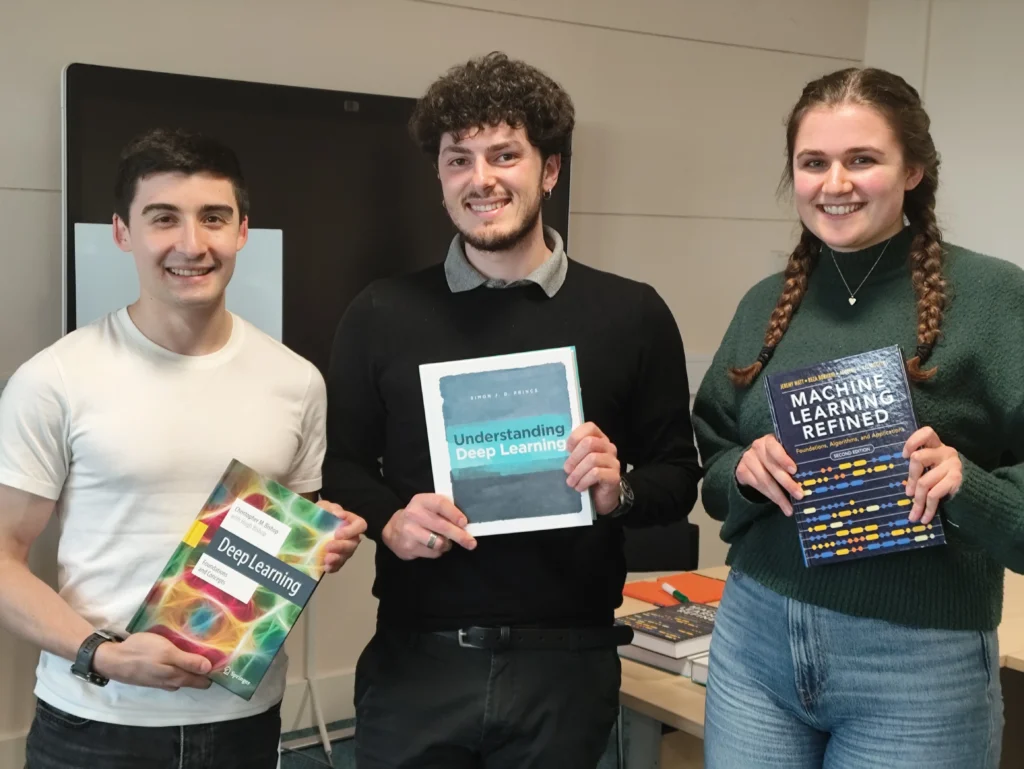
Alongside these projects, we supported the next generation of researchers through 14 internships across 8 UK higher education institutions, giving hands-on experience with AI-enabled chemical research.
In addition to our pump-priming projects and internships, AIchemy has continued to advance its Forerunner projects, which exemplify long-term, high-impact research at the interface of AI and chemistry. Forerunner 2 successfully reached completion this year, delivering key insights and outcomes in the area of crystal structure prediction. Forerunner 3 is just beginning with exciting developments anticipated in the months ahead. The remaining three Forerunner projects continue to progress, building on previous achievements and driving innovation across molecules, materials, and devices.
To further strengthen collaborations, AIchemy also awarded £25,000 in travel funding, enabling researchers to visit partners, attend workshops, and foster new connections across the community. With Round 2 of funding now open, we are excited to see even more projects, talent, and collaborations take off. Applications are encouraged from all researchers working at the intersection of AI and chemistry.
Research in Print
AIchemy’s researchers continued to share their discoveries throughout 2025, contributing to the wider scientific community with 7 high-impact publications. These papers covered a range of topics, including AI-driven chemical discovery, robotics, automation, and materials design. Each publication reflects collaborative efforts across academia and industry, demonstrating how AIchemy is advancing both the science and application of AI in chemistry.
AIchemy in the Headlines
2025 was also a year of recognition for the AIchemy community. Prof. Kim Jelfs was awarded the prestigious Faraday Discovery Fellowship, acknowledging her pioneering work at the interface of AI and chemistry. Prof. Andy Cooper and Prof. Matt Rosseinsky were honoured with Royal Society awards for their outstanding contributions to chemical science. Adding to this, Prof. Andy Cooper featured in The Economist, highlighting AIchemy’s impact on shaping the future of materials and chemical research.
These accolades reflect not only individual achievement but also the strength of the collaborative, interdisciplinary community that drives AIchemy forward.
Thank You to Our Community
None of AIchemy’s achievements in 2025 would have been possible without the dedication and support of our vibrant community. We are grateful to our researchers, every speaker, participant, and collaborator who contributed to our events and training, and our partners and sponsors who make this work possible.
Most importantly, we thank the broader AIchemy community for engaging with us, sharing ideas, and helping drive innovation at the intersection of AI and chemistry.
Looking Ahead: 2026
As we step into 2026, we are inspired by the achievements of 2025 and energized by the opportunities ahead. The coming year promises more events, research milestones, and chances to collaborate, learn, and innovate. We invite our community to stay engaged by subscribing to our newsletter, exploring our events and training pages, and connecting with us on LinkedIn, X, BlueSky and YouTube. Together, we look forward to another year of discovery, impact, and meaningful collaboration in AI and chemistry.