
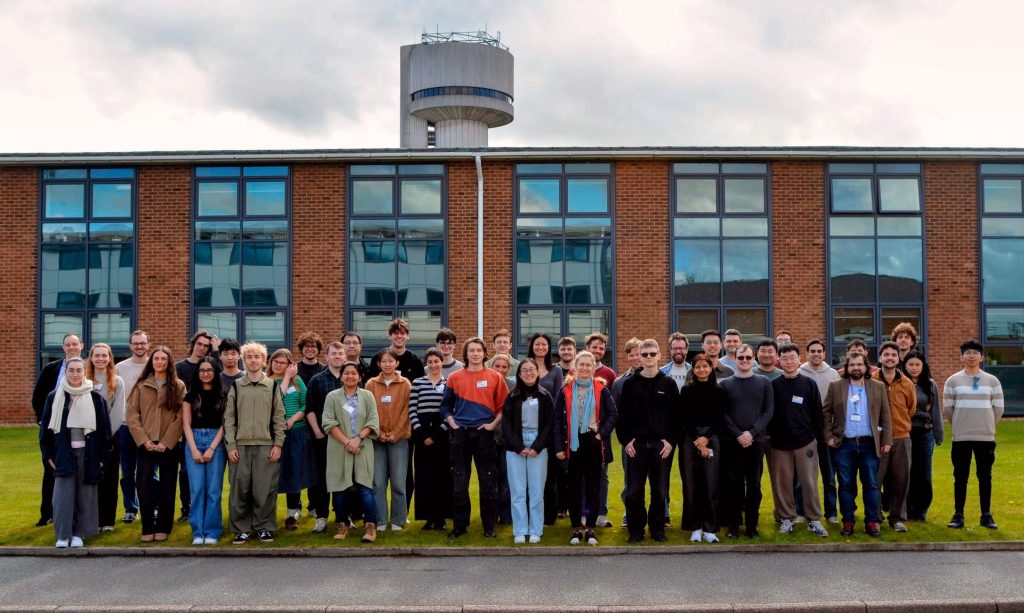
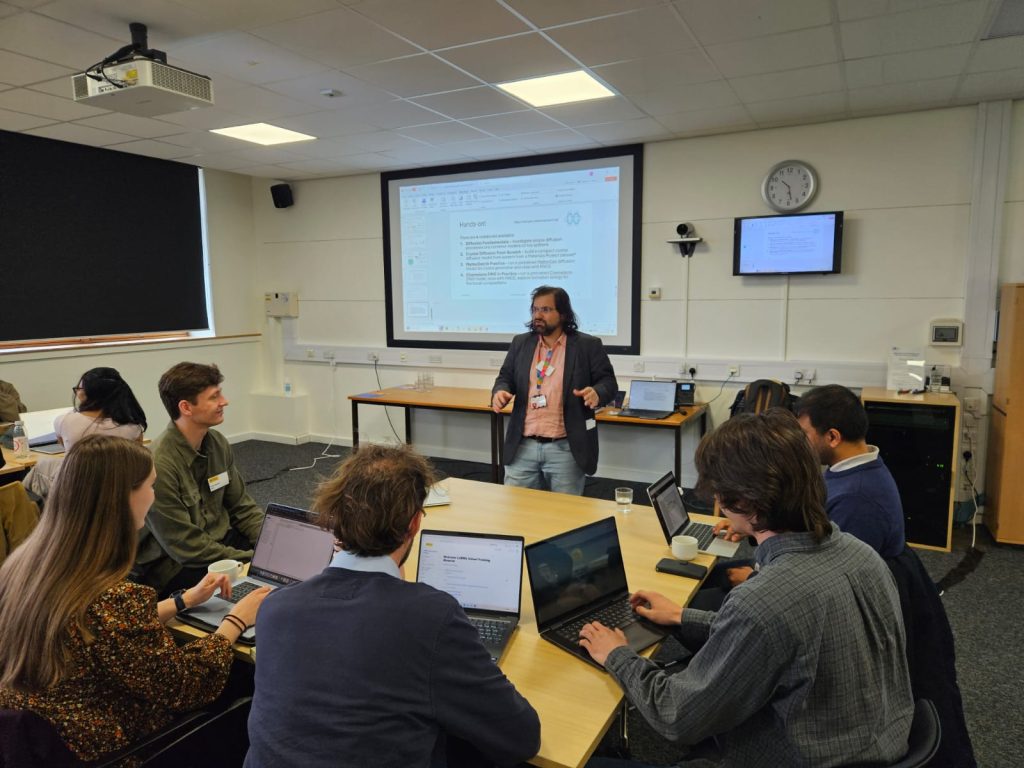
From 13–17 April 2026, we welcomed a new cohort of researchers to the Chemical and Materials Machine Learning School (CaMMLs) at STFC Daresbury Laboratory. Supported by the AIchemy Hub in collaboration with PSDI, the school brought together delegates for an intensive week of learning, collaboration and community building.
Building Foundations in Machine Learning
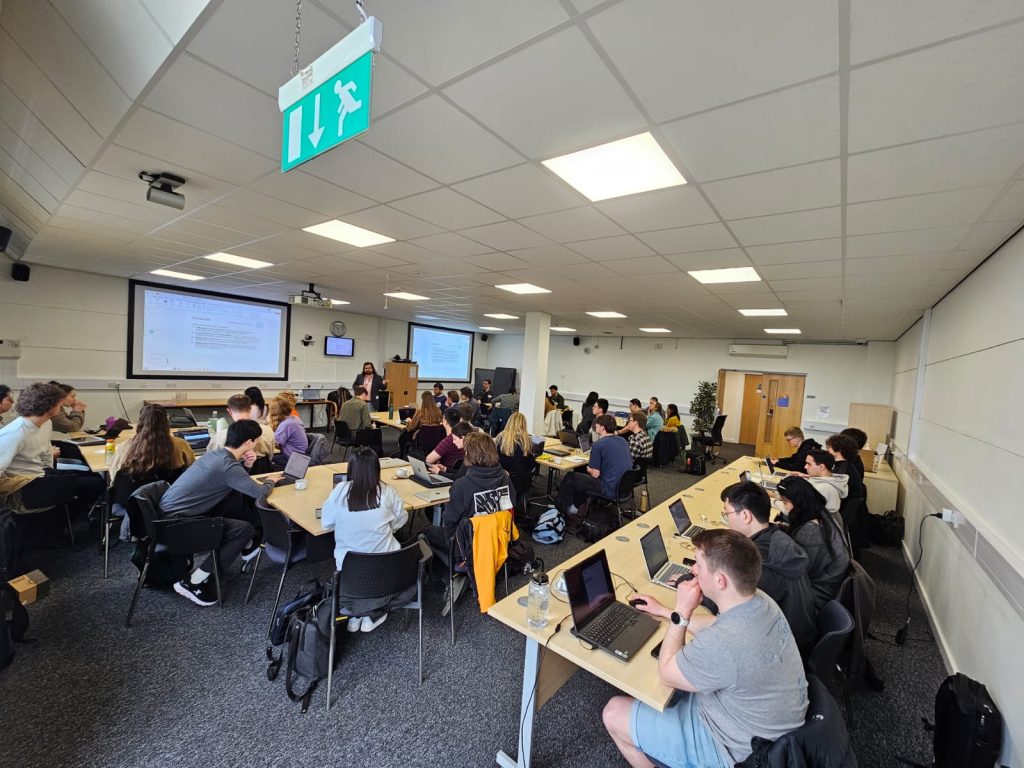
The week began with Dr Lukas Hormann, who introduced the core principles of machine learning and led the first practical sessions, setting the foundation for the rest of the programme.
Building on this, Dr Nong Arthrith explored descriptors and unsupervised learning, while Dr Austin Mroz introduced Bayesian optimisation, combining theory with interactive practical sessions that allowed participants to apply these approaches in a chemistry context.
Midweek, Dr Keith Butler led sessions on neural networks and later returned to deliver content on generative models, linking modern AI developments such as large language models to materials science. Meanwhile, Dr Alex Ganose introduced graph neural networks, giving participants insight into one of the most important techniques for modelling molecular and materials systems.
The later part of the week focused on machine learning interatomic potentials (MLIPs), with Dr Ioan-Bogdan Magdău and Dr Alin-Marin Elena leading both lectures and practicals, helping participants connect machine learning methods to atomistic simulation workflows.
On the final day, Dr Bradley Martin delivered a session on generative models and large language models (LLMs), bringing the programme full circle by connecting core machine learning concepts to some of the most rapidly evolving areas of AI.
In addition to the core teaching programme, evening research seminars brought in external perspectives. This year, we were delighted to host Dr Ruby Sedgwick (Xyme) and Dr Venkat Kapil (UCL) who shared insights into real-world applications of machine learning in chemistry and materials science.
Posters and Networking
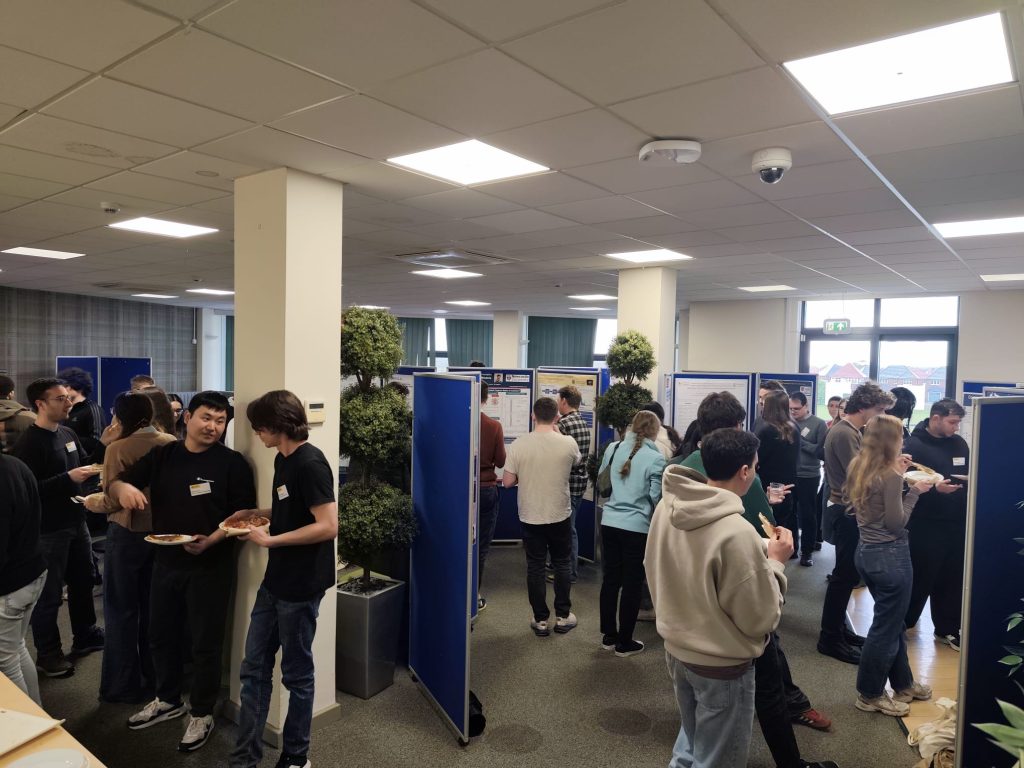
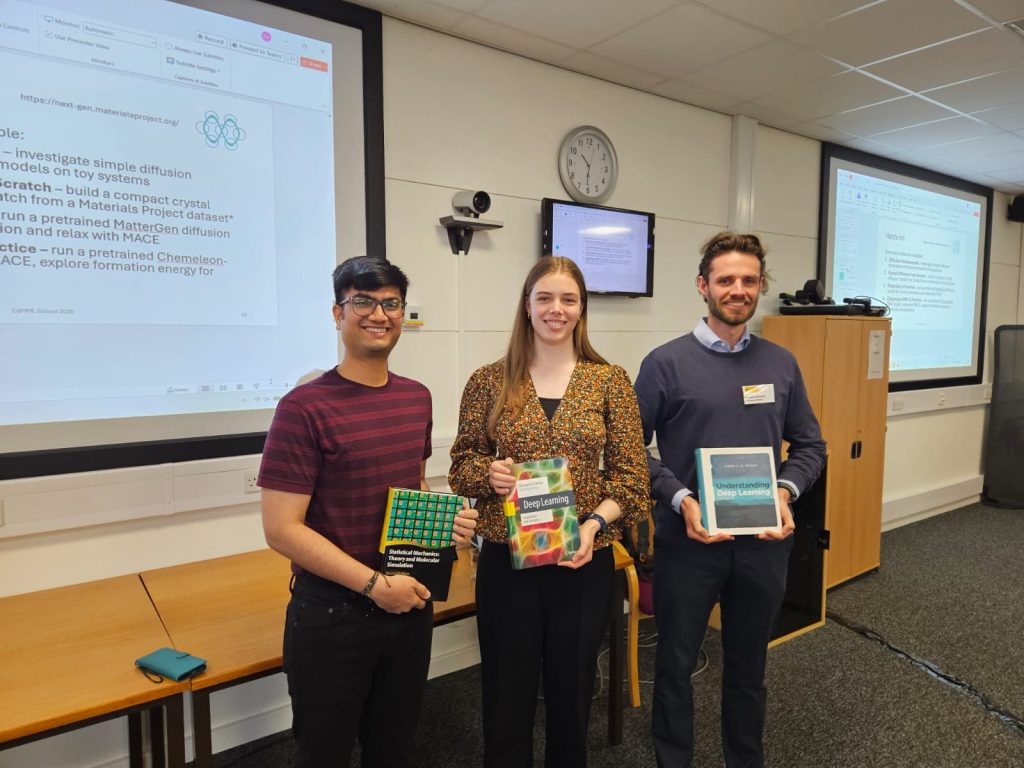
A dedicated poster session provided space for deeper discussion and peer-to-peer exchange. The room buzzed with conversations as attendees shared early-stage ideas, methodologies, and challenges. The CaMMLs week concluded with the announcement of the poster prize winners, recognising the quality, creativity, and impact of the work on display.
Congratulations to our Poster Winners:
Varnit Jain, University of Liverpool
Laura Ellington, Imperial College London
Eduardo Schneider, TU Braunschweig, Germany
Looking Ahead
As AI continues to transform chemistry and materials science, training initiatives like CaMMLs are essential in equipping researchers with the tools and confidence to innovate.
We look forward to seeing how this year’s cohort builds on these skills and to welcoming the next generation of researchers in future editions of the school.
We look forward to seeing you at our next event!
If you would like to find out more about how AIchemy can support your workshop idea click the button below.