

We are delighted to welcome you to our AIchemy Hub’s monthly webinar series.
This month’s talks:
Prof. Vitaliy Kurlin – University of Liverpool
Talk Title: Resolving the data ambiguity for periodic crystals
The discontinuity of cell-based representations of periodic crystals under almost any noise has been known theoretically and experimentally at least since 1965. As a result, major materials databases accumulated thousands of near-duplicate structures that could not be recognized by any past tools [1]. The latest example is the correction of the A-lab paper in Nature [2], where almost all words “novel” and “discovery” were crossed out. We will present a rigorously justified approach to uniquely identifying the atomic structure of any periodic crystal by complete, continuous and fast geometric codes [3].
[1] D.Chawla. C&EN news, https://cen.acs.org/research-integrity/Duplicate-structures-haunt-crystallography-databases/103/web/2025/12.
[2] N.Szymanski et al. Author Correction: An autonomous laboratory for the accelerated synthesis of inorganic materials. Nature (2026), https://static-content.springer.com/esm/art%3A10.1038%2Fs41586-025-09992-y/MediaObjects/41586_2025_9992_MOESM1_ESM.pdf
[3] D.Widdowson, V.Kurlin. Resolving the data ambiguity for periodic crystals. NeurIPS 2022, v.35, p.24625-2463. Extended version to appear in SIAM J Appl. Math. 2026, https://arxiv.org/abs/2108.04798.
Dr. Daniel Widdowson – University of Liverpool
Talk Title: The Crystal Geomap visualises materials databases in real time
Our rigorously justified invariants of crystals give rise to a continuous space containing all crystals, where the proximity of two crystals does not depend on a choice of unit cell and motif, but whether the two structures can be closely matched atom for atom by isometry [4]. This led us to develop software to visualise this space and be an interface to ultra-fast comparisons of crystals enabled by our invariants [5]. In this talk we will explore unusual “features” of crystal databases such as the ICSD made visible by our depictions of crystal space, examples of nearly identical crystals represented with completely different cells and motifs [6], and a live example of detection of all geometric (near-)duplicates in the ICSD, a calculation which was computationally intractable by existing methods.
[4] O.Anosova, V.Kurlin, M.Senechal. The importance of definitions in crystallography. IUCrJ, v.11(4), p.453-463 (2024).
[5] D.Widdowson, V.Kurlin. Continuous invariant-based maps of the Cambridge Structural Database. Crystal Growth & Design, v.24(13), p.5627–5636 (2024).
[6] D.Widdowson, V.Kurlin. Geographic-style maps with a local novelty distance help navigate the materials space. Scientific Reports, v.15, 27588 (2025).
Speakers
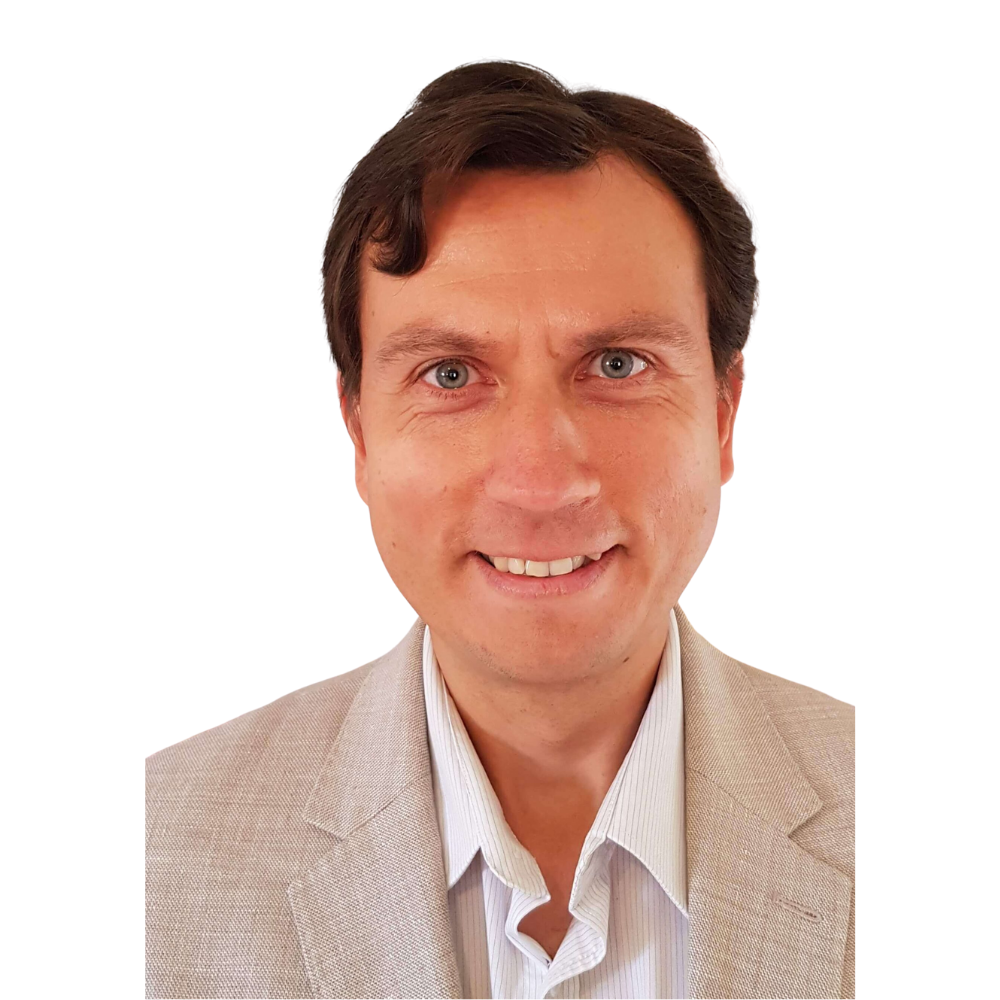
Prof. Vitaliy Kurlin
Professor of Computer Science

Dr. Daniel Widdowson
Senior Software Engineer