
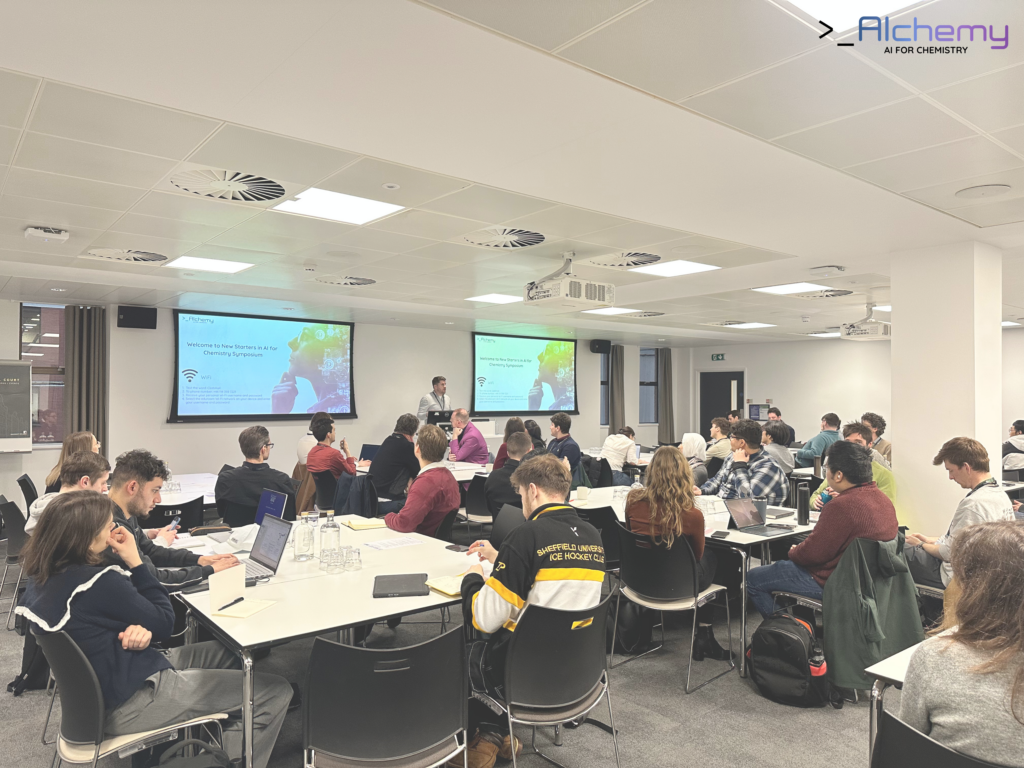
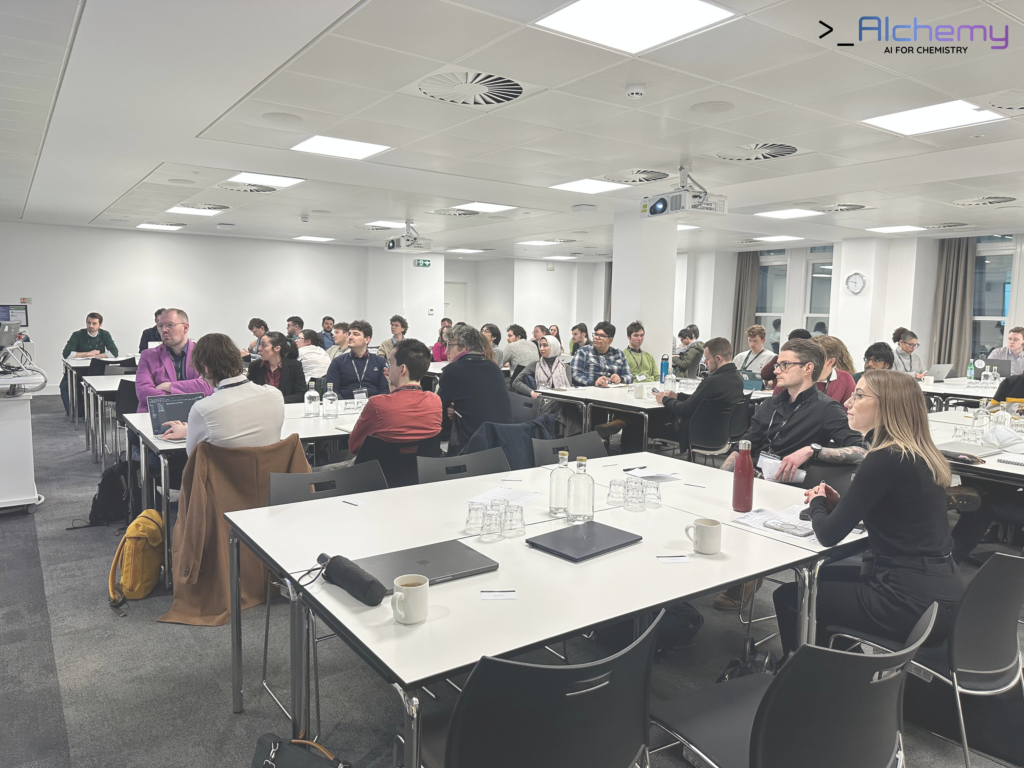
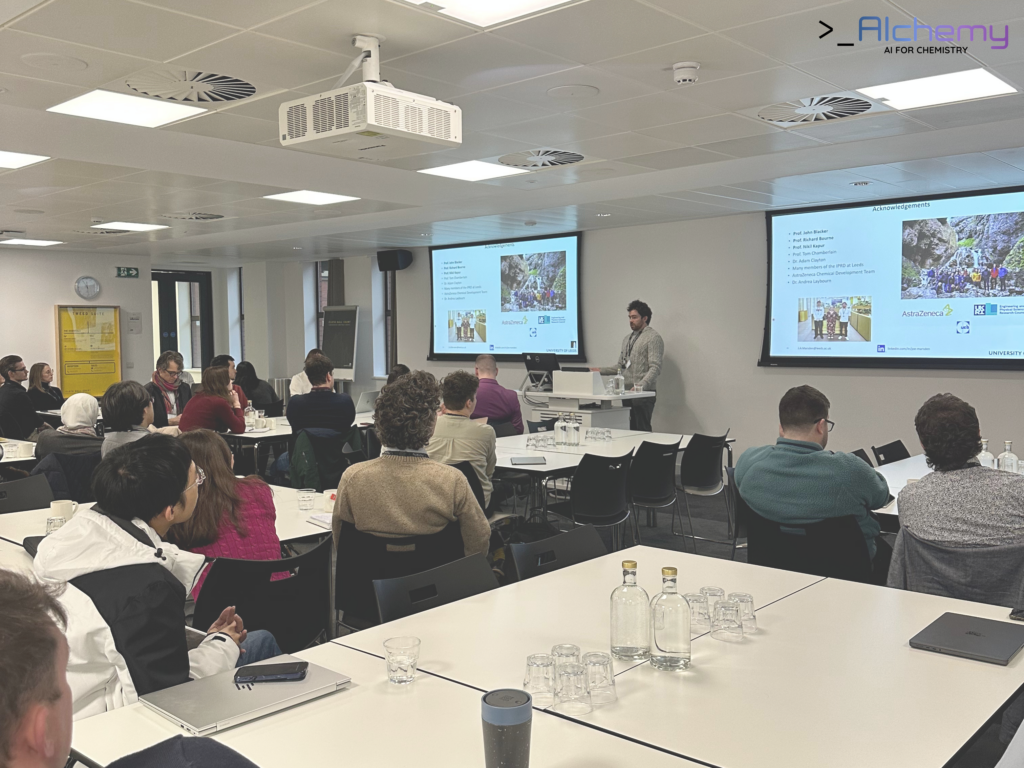
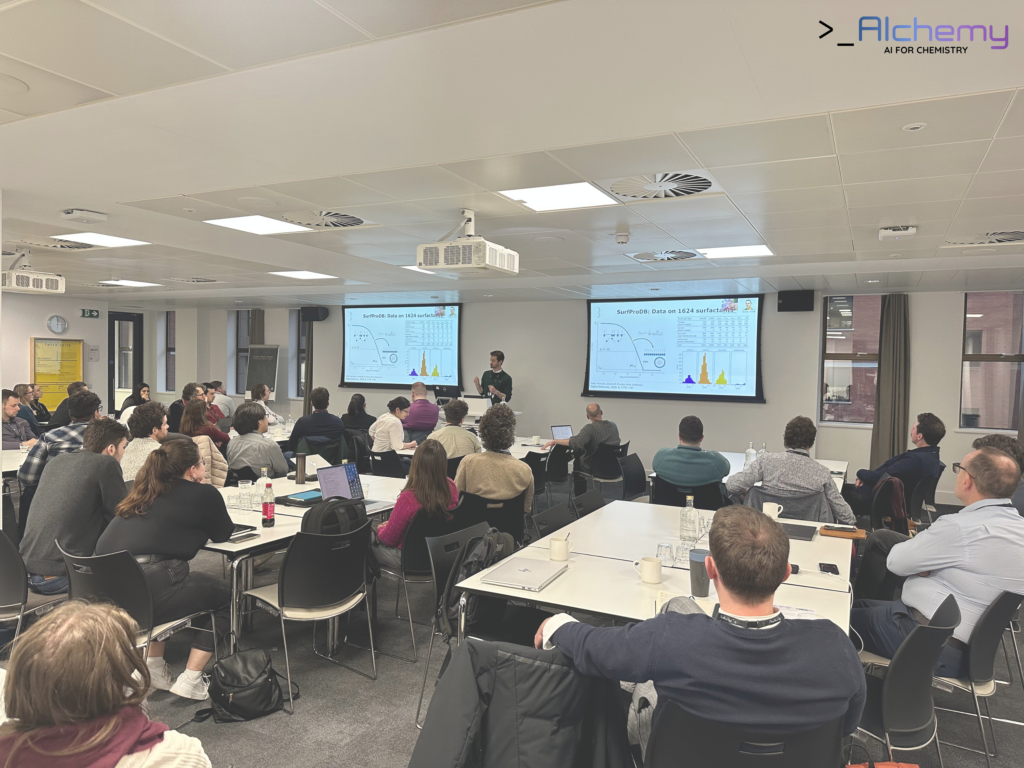
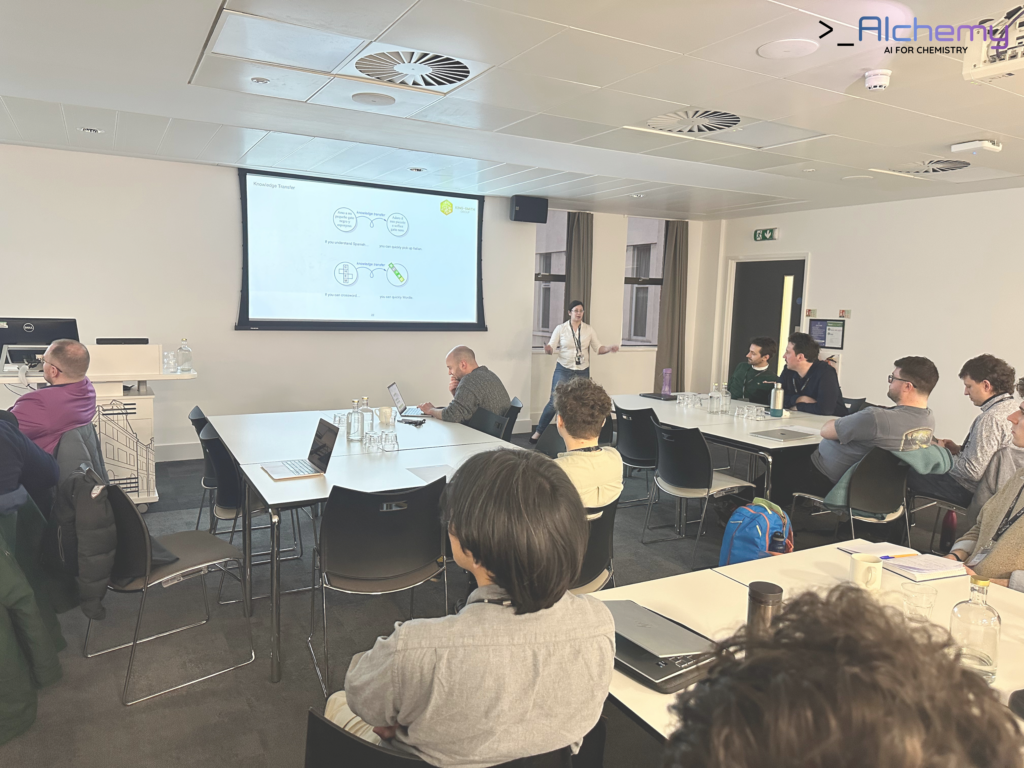
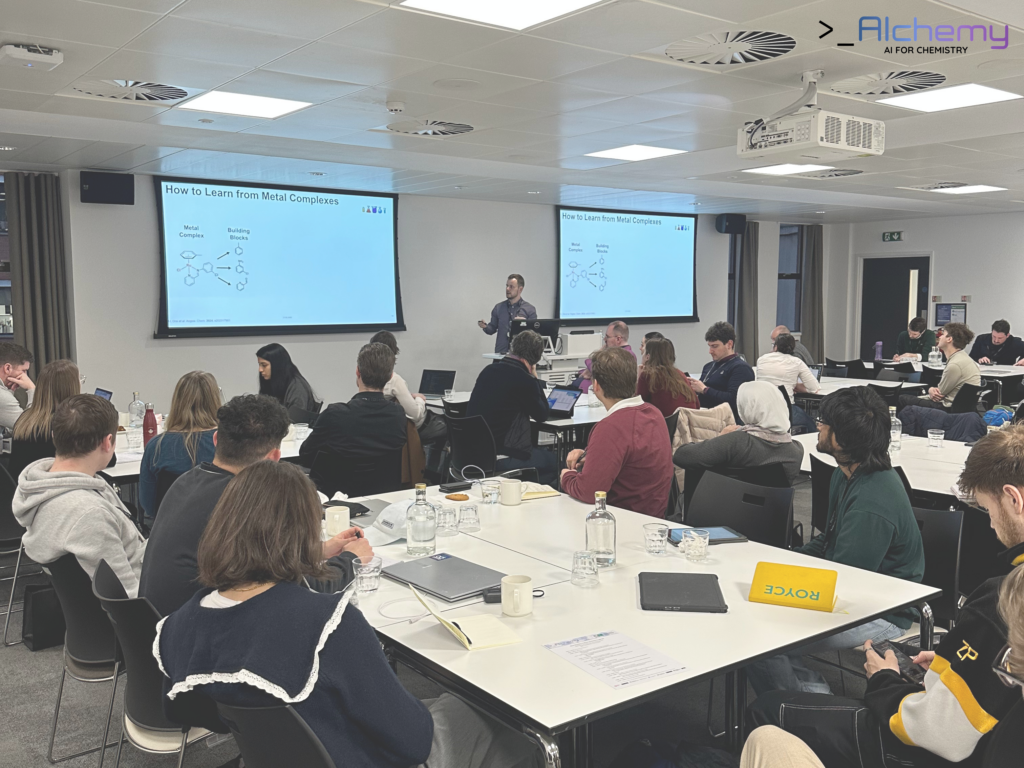
On Tuesday 27 January 2026, researchers from across the UK and beyond gathered at Cloth Hall Court, University of Leeds for New Starters in AI for Chemistry Symposium, a full-day event celebrating emerging voices, fresh ideas, and the growing intersection between artificial intelligence and chemical research.
Designed to bring together early-career researchers and new entrants to the field, the event offered a snapshot of where AI-enabled chemistry is heading, from autonomous laboratories and robotic chemists to advanced machine learning methods for materials and molecular discovery.
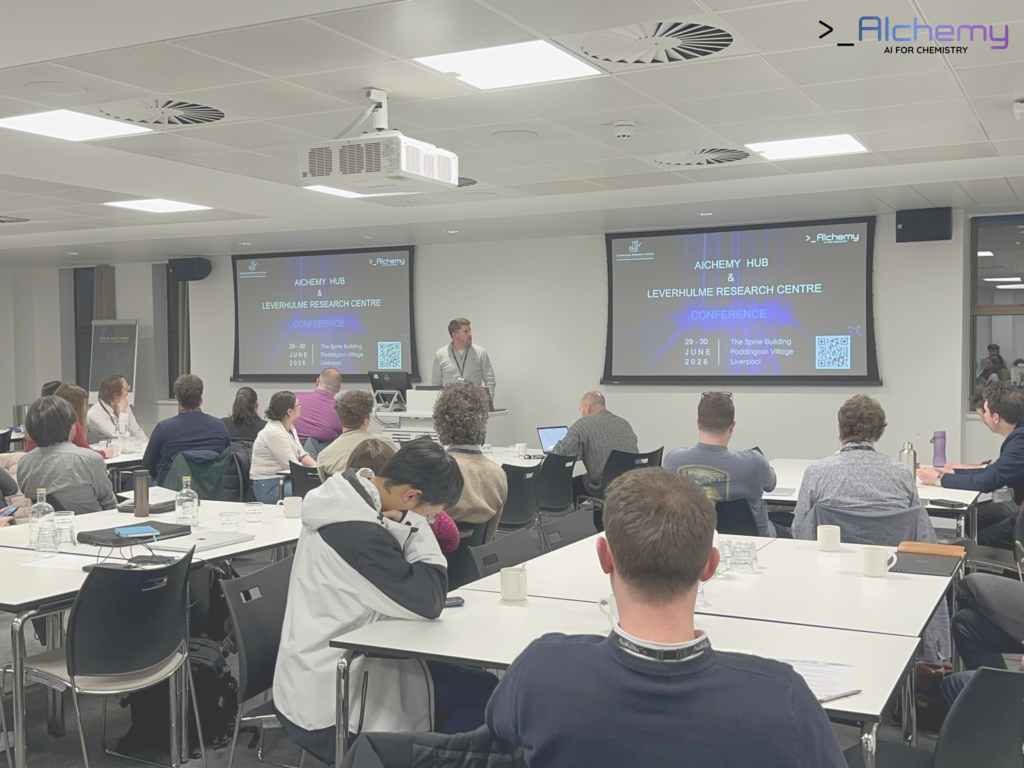
Following arrivals and informal conversations over coffee, the day opened with a warm welcome, setting an inclusive and collaborative tone that carried through the entire programme. Attendees represented a diverse mix of disciplines, institutions, and technical backgrounds, united by a shared interest in how AI can accelerate, augment, and transform chemical science.
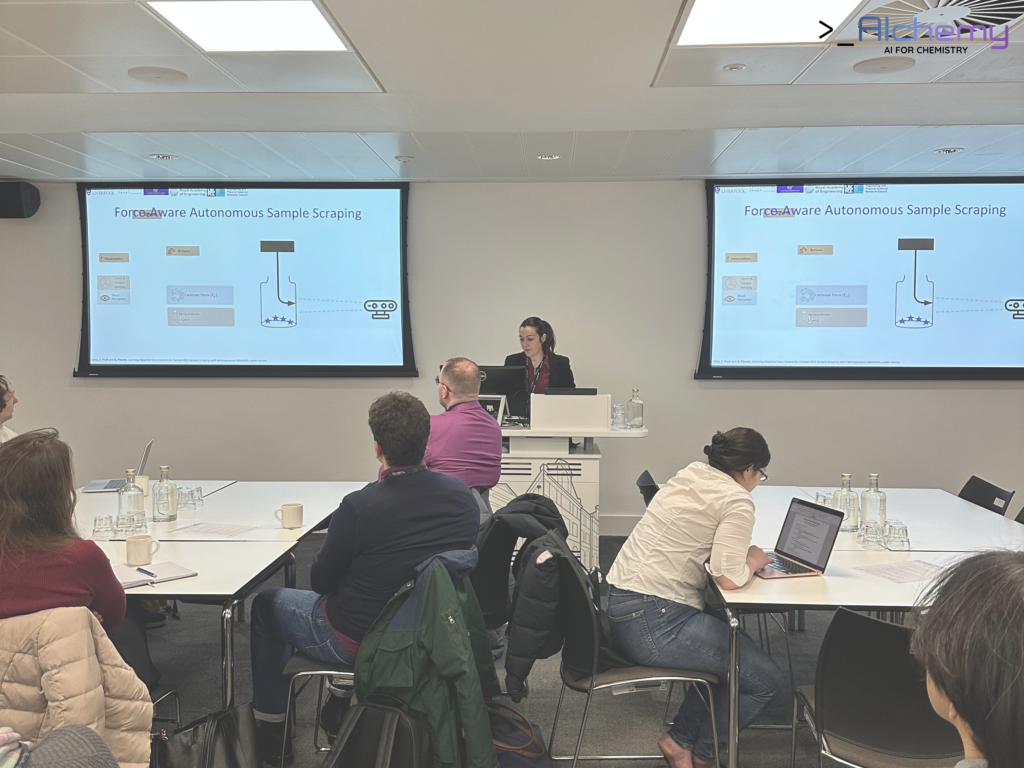
Keynote: Embodied AI For Next-Generation Robotic Chemists
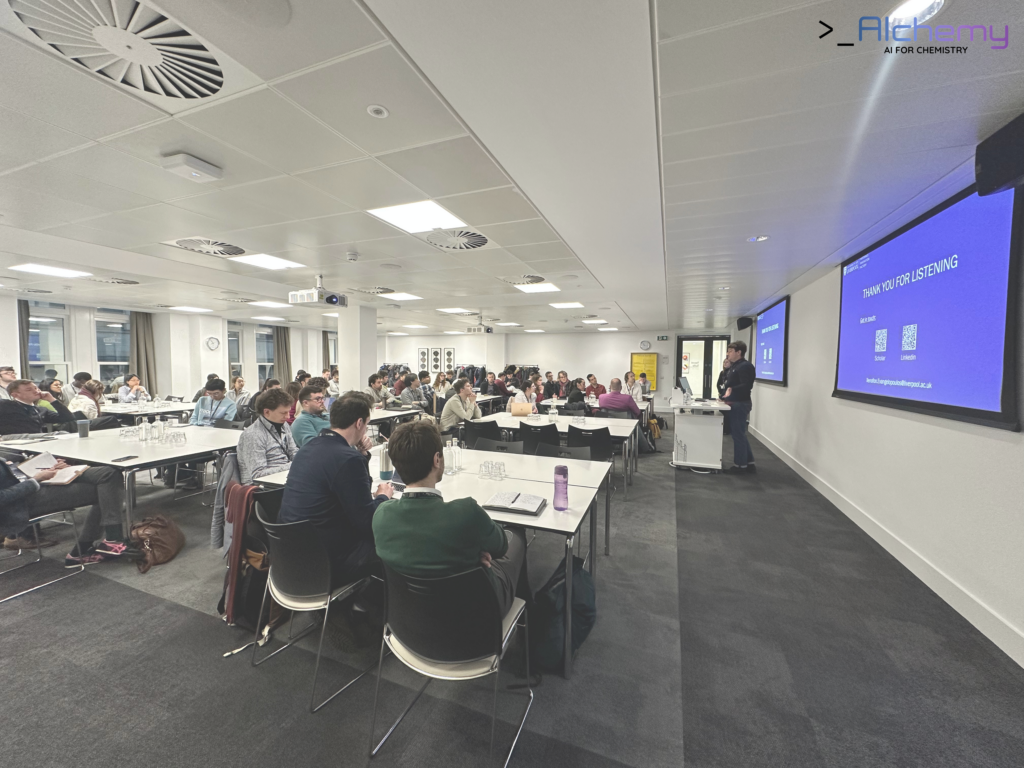
The morning keynote was delivered by Dr Gabriella Pizzuto (University of Liverpool), who offered a compelling roboticist’s perspective on Embodied AI for next-generation robotic chemists. Her talk explored how physical embodiment, perception, and intelligent control can enable robotic systems to move beyond automation towards genuinely adaptive chemical experimentation.
The keynote sparked discussion, particularly around the challenges of integrating AI decision-making with real-world laboratory constraints, a theme that would resurface throughout the day.
Accelerating Discovery with Data and Design
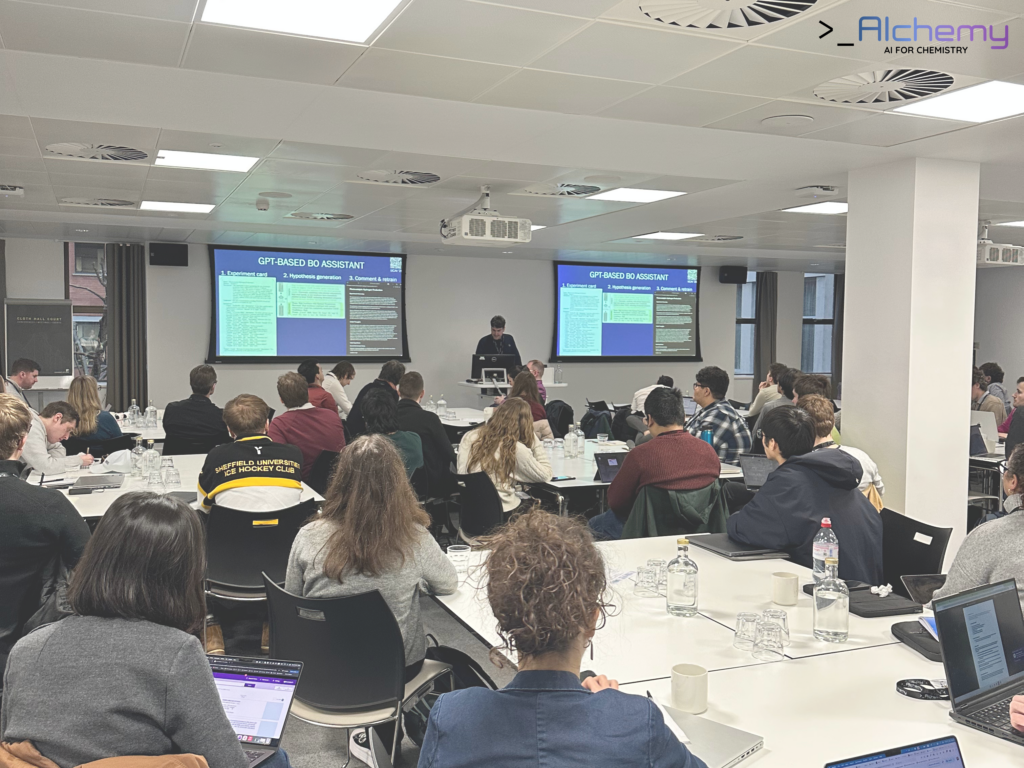
The morning session continued with Dr Xenofon Evangelopoulos (University of Liverpool), who presented work on knowledge-guided Bayesian optimisation as a powerful approach to accelerating chemical discovery. By combining domain expertise with probabilistic models, this method offers a route to more efficient exploration of complex chemical spaces.
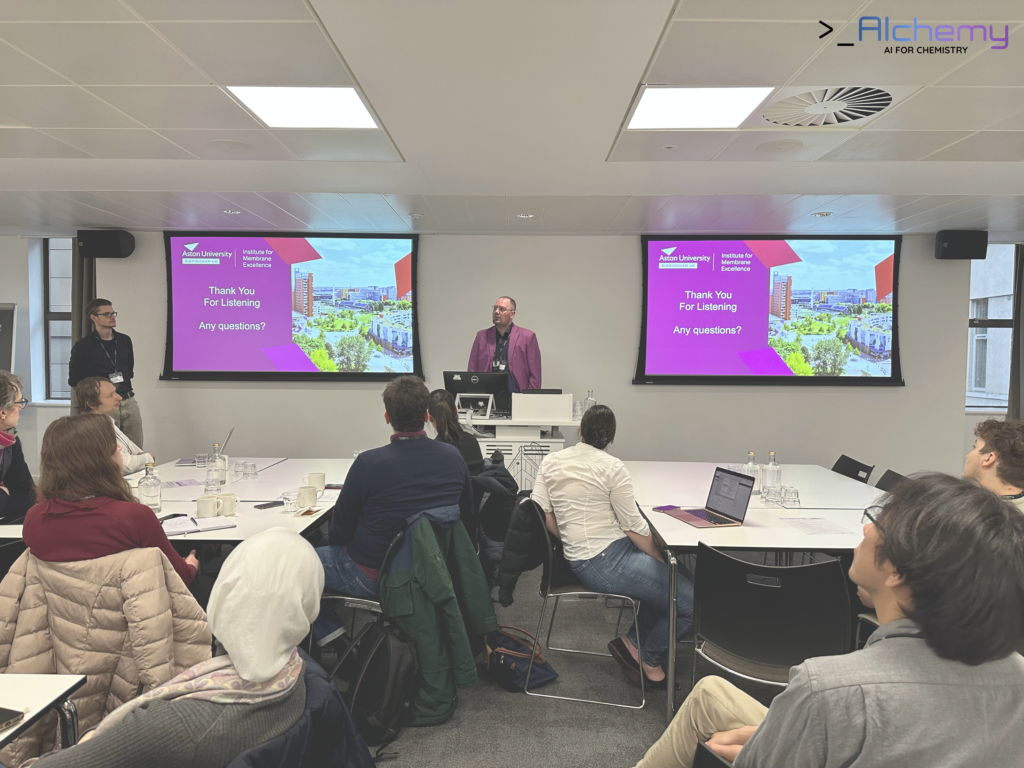
After a short break, attendees heard from Dr Sam Parkinson (Aston University) on the journey towards self-driving laboratories for polymer chemistry, followed by Dr Joe Marsden (University of Leeds), who discussed digital approaches to identifying no-flow conditions in continuous crystallisation. Together, these talks highlighted how AI can enhance both experimental efficiency and process understanding.
Posters, Lunch, and Networking
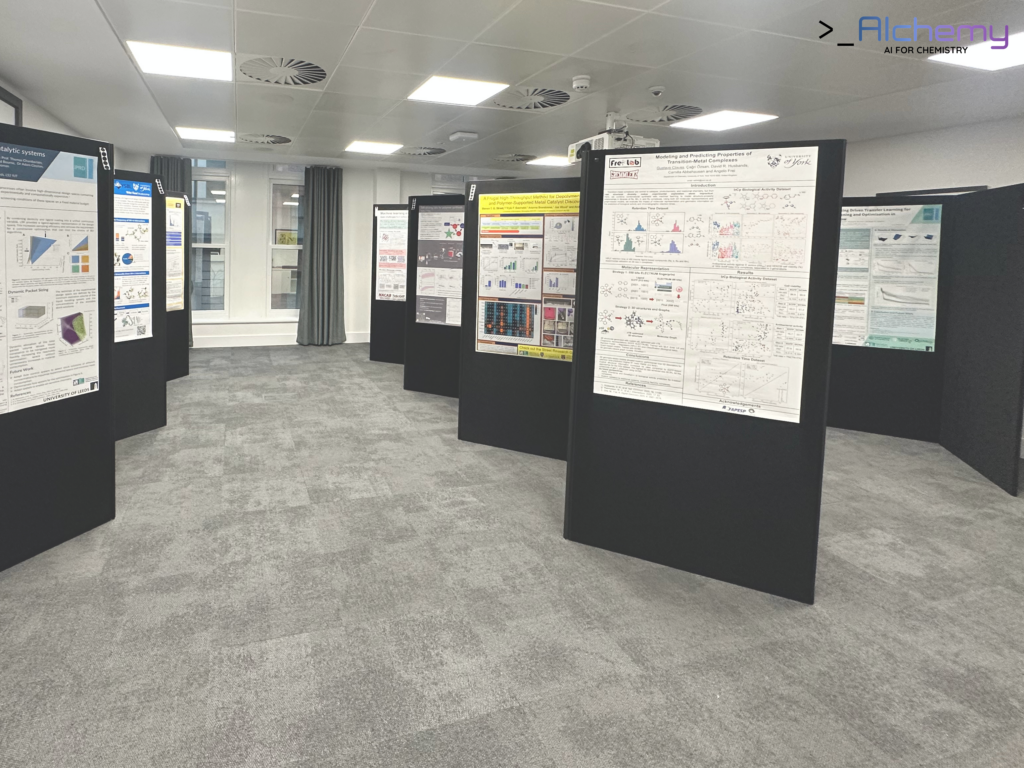
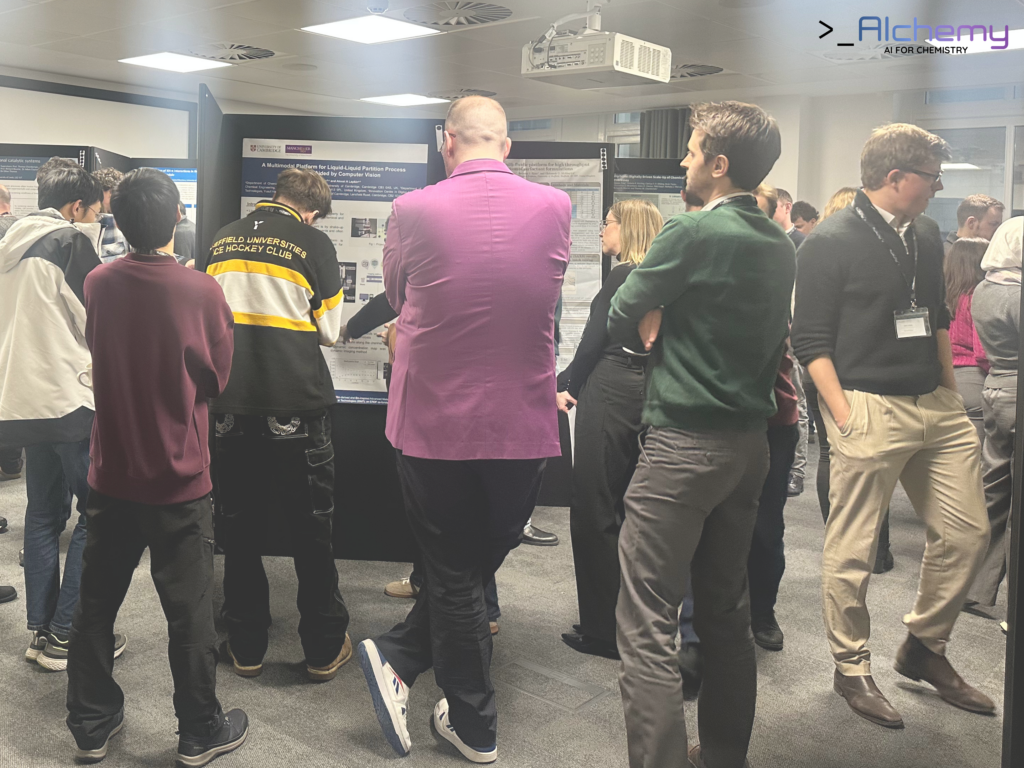
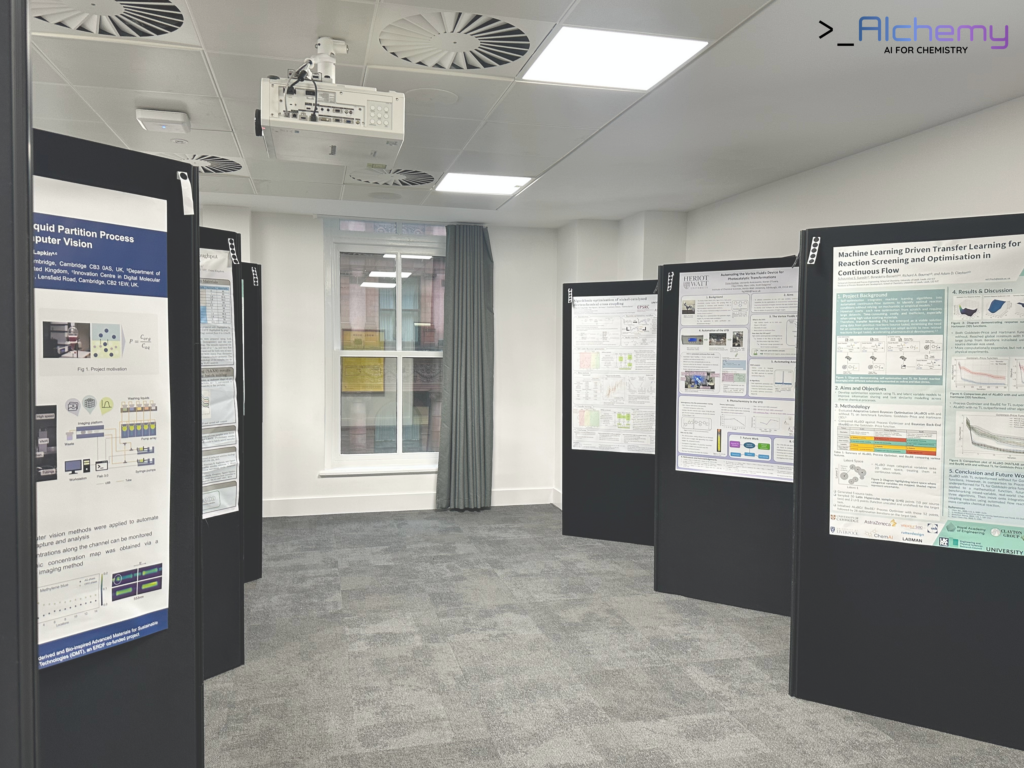
A lunchtime poster session provided space for deeper discussion and peer-to-peer exchange. The room buzzed with conversations as delegates shared early-stage ideas, methodologies, and challenges, reinforcing the event’s aim of fostering a supportive community for researchers at the start of their AI & Chemistry journey.
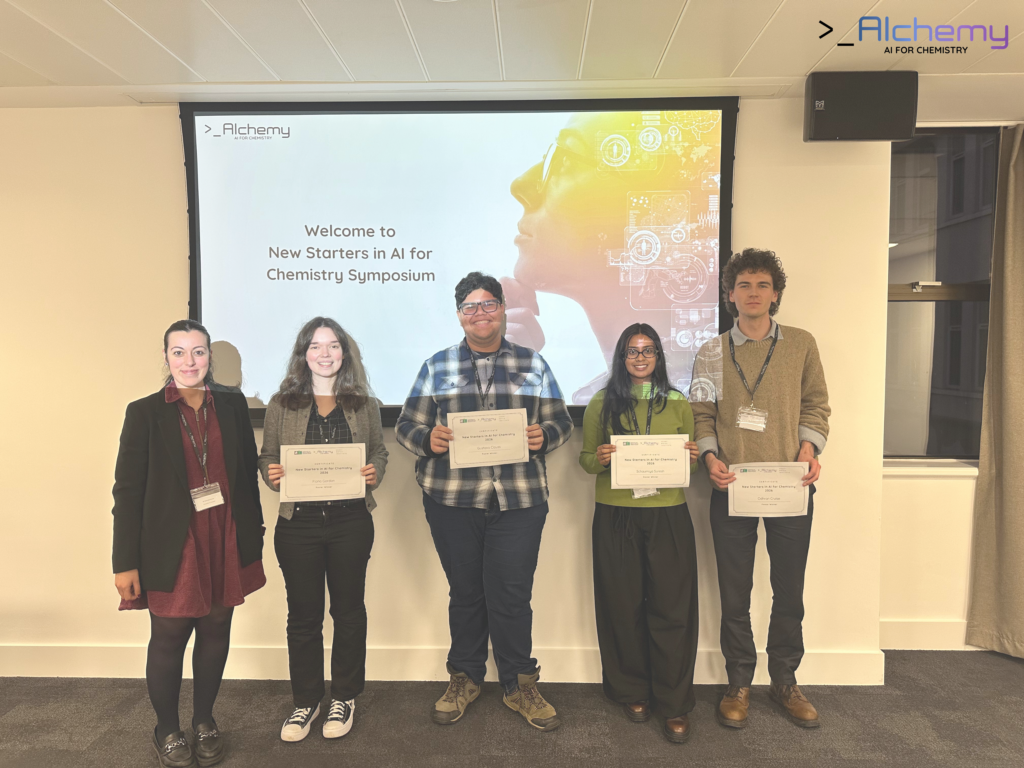
The poster session concluded with the announcement of the poster prize winners, recognising the quality, creativity, and impact of the work on display. Congratulations to Gustavo Clauss (University of York), Odhran Cruise (University of Leeds), Fiona Gordon (Heriot-Watt University), and Schaumiya Suresh (University of Leeds).
Machine Learning Across Chemical Domains
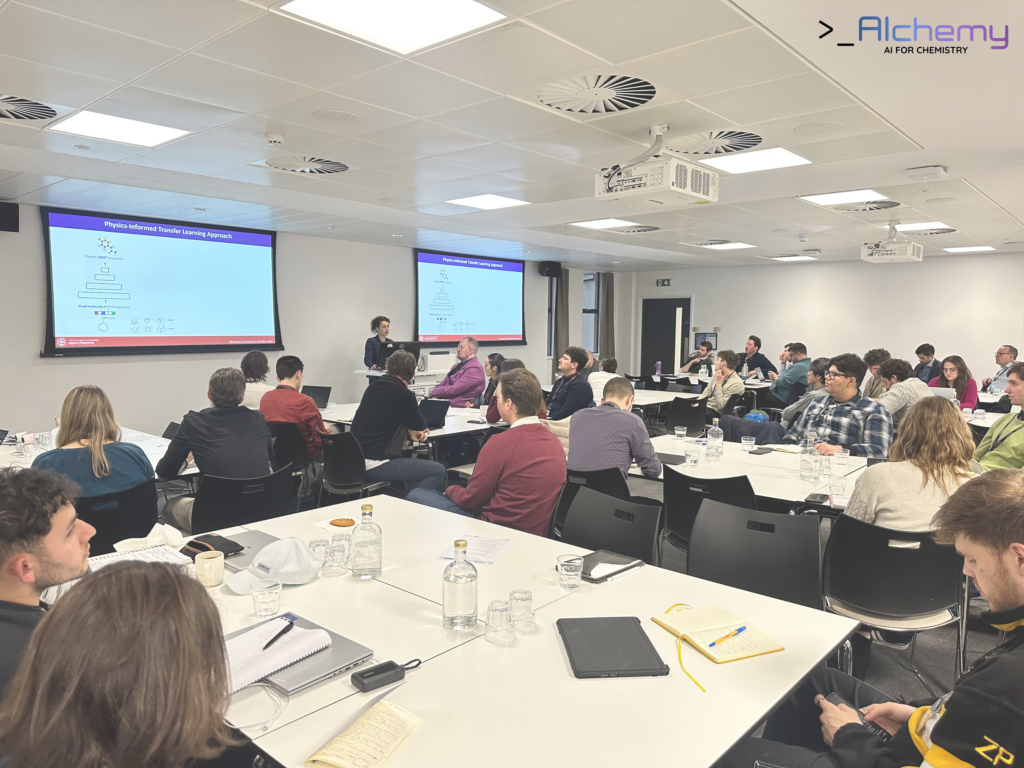
The afternoon programme showcased the breadth of AI applications across chemistry. Dr Eleonora Ricci (University of Edinburgh) presented a transfer learning approach for predicting polymer equation-of-state parameters, demonstrating how data-efficient models can be leveraged in materials science.
This was followed by Dr Michael Tilby (University of Bristol), who explored the use of unsupervised machine learning in developing photochemical reactions, and Dr William Robinson (Radboud University), who discussed autonomous, AI-enhanced robotic platforms for formulation data collection.
After a short afternoon break, the final session featured Dr Angelo Frei (University of York) on predicting properties of metal complexes using machine learning, and Dr Emma King-Smith (University of Edinburgh), who closed the talks with insights into fine-tuning strategies for deep learning models trained on experimental chemistry data.
Looking Ahead
The day concluded with poster prizes, followed by an informal networking and drinks reception. Conversations continued, with many attendees reflecting on the value of having a dedicated space for new starters to share work, ask questions, and build confidence in a rapidly evolving field.
New Starters in AI for Chemistry highlighted not only the technical innovation happening across the community, but also the importance of connection, openness, and collaboration as AI becomes an increasingly integral part of chemical research. The enthusiasm and quality of discussion throughout the day made it clear: the future of AI-enabled chemistry is in very capable hands.
We look forward to seeing you at our next event!
If you would like to find out more about how AIchemy can support your workshop idea click the button below.